

Public libraries are more than just quiet buildings filled with books. They are dynamic community hubs that provide educational resources, digital access, community programming, and more. To manage all these functions effectively, a public library needs a clearly defined organizational structure.
A strong organizational structure ensures that services are delivered efficiently, roles are clearly understood, and staff can collaborate to meet the evolving needs of the community.
What Is a Public Library Organizational Structure?
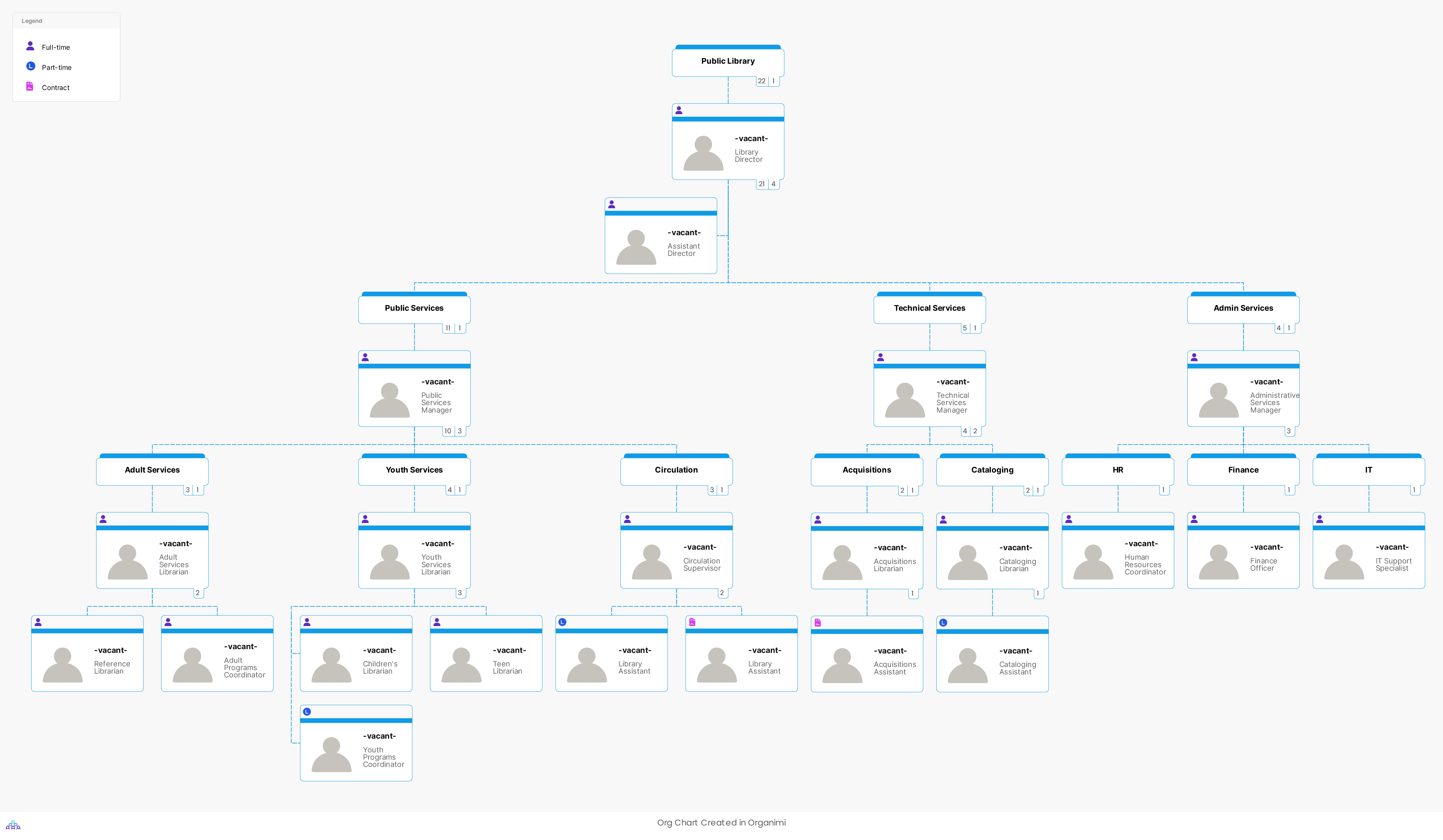
A public library’s organizational structure is the framework that outlines how tasks, responsibilities, and authority are distributed across the library staff. It visually represents the hierarchy within the library, showing reporting lines and defining the roles of each team member.
This structure helps libraries achieve operational goals, support their educational and civic mission, and provide excellent service to patrons. It’s also a key tool for managing staffing, budgeting, programming, and compliance with municipal or regional policies.
The Main Components of a Public Library Organizational Structure
A well-organized public library typically includes several key roles and departments, each contributing to the library’s overall success.
Library Director — The Library Director is the top executive in a public library. They are responsible for strategic planning, policy development, budgeting, and overall leadership. They report to a governing body, such as a Library Board or City Council.
Assistant Director / Deputy Director — This role supports the Library Director and often oversees daily operations, staff supervision, and departmental coordination.
Department Heads / Managers — These individuals manage specific areas such as adult services, children’s services, technical services, and IT. They ensure programs and services within their department align with the library’s goals.
Library Assistants / Technicians — Supporting librarians and department managers, library assistants help with circulation, shelving, inventory, and customer service.
Support Staff — This includes administrative staff, custodial teams, security, and IT personnel, all of whom help ensure smooth and secure library operations.
Types of Public Library Organizational Structures
Libraries may adopt different types of organizational structures depending on their size, governance model, and service offerings.
Hierarchical Structure — This traditional model features a clear chain of command, often starting with the Library Director and flowing downward through department heads to front-line staff. This structure works well for larger library systems where defined roles and responsibilities are crucial.
Matrix Structure — In a matrix structure, staff may report to both functional managers and project-based leaders. For example, a librarian might work in adult services but also help with system-wide programming. This model supports collaboration and cross-functional teamwork.
Flat Structure — Some smaller libraries use a flat structure with fewer layers of management. This encourages direct communication and a collaborative approach to service delivery.
Decentralized Structure — Often used in multi-branch library systems, each branch operates semi-independently with its own manager, while still reporting to central leadership. This allows for tailored services based on local community needs.
How to Create Your Public Library Organizational Structure
Designing the right structure for your public library helps improve efficiency, service quality, and staff alignment. Follow these steps to get started:
Identify Key Roles and Departments — Determine the core services your library provides—circulation, programming, digital access, reference services—and define the roles required to support them.
Define Responsibilities Clearly — Document what each role is responsible for, including who they report to and how their performance will be measured. This clarity reduces overlap and boosts. accountability.
Establish Reporting Lines — Create a clear chain of command. From the Library Director down to part-time assistants, ensure every team member knows who they report to and how decisions are made.
Choose the Right Structure — Base your structure on your library’s size, number of locations, and community needs. A small-town library might use a flat structure, while a metropolitan system may require a more complex, layered model.
Build Your Organizational Chart — Use a tool like Organimi to create a visual org chart that maps out your structure. Include names, titles, departments, and reporting lines to make your chart both informative and easy to understand.
Communicate and Update Regularly — Share your org chart with all staff and stakeholders. Revisit it regularly to reflect changes in staffing, responsibilities, or service strategy.
In Summary
A public library is a vital part of any community, offering access to knowledge, technology, and opportunities for lifelong learning. Behind the scenes, a well-organized structure ensures that these services are delivered effectively. Whether you’re running a small rural branch or a multi-location urban library system, having a clear organizational structure is essential to achieving your mission.
Looking to build dynamic and shareable org charts? Explore what Organimi’s org chart software can do and sign up for a free 14-day trial today!