

Modern organizations are becoming more collaborative, flexible, and project driven. As teams work across departments and initiatives, traditional reporting structures are not always enough. But, that’s where dotted-line reporting comes in.
Dotted-line reporting helps organizations connect employees to multiple managers, teams, or projects without changing their primary role. It is commonly used in cross functional teams, matrix organizations, and fast growing companies that need flexibility and visibility across the business.
What Is Dotted-Line Reporting?
Dotted-line reporting is a secondary reporting relationship outside of an employee’s direct manager.
In most cases, an employee has:
- A solid-line manager who oversees their primary role and performance
- A dotted-line manager, who may provide guidance on projects, initiatives, or cross functional work
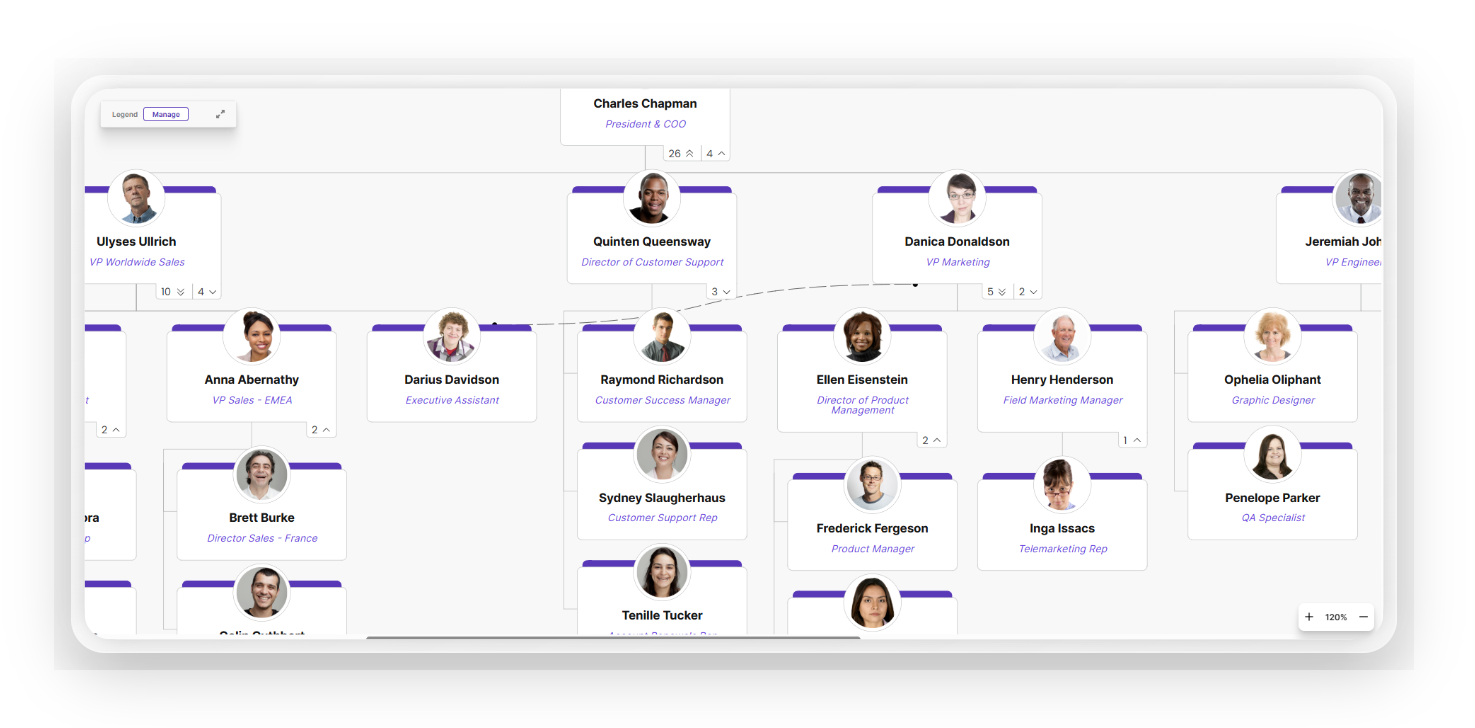
The term comes from organizational charts, where indirect relationships are shown using a dotted line instead of a solid one. For example, a Marketing Coordinator may report directly to the Marketing Director while also supporting a Product Manager during a product launch.
Why Do Companies Use Dotted-Line Reporting?
Dotted-line reporting helps organizations improve collaboration without restructuring entire departments.
Companies often use it to:
- Support cross functional projects
- Share resources across teams
- Improve communication between departments
- Increase flexibility in matrix organizations
- Give employees exposure to different leaders and initiatives
It allows teams to stay connected while keeping reporting structures organized
What Are the Benefits of Dotted-Line Reporting?
When managed well, dotted-line reporting can help organizations work more efficiently.
- Better Collaboration: Employees can work across teams more easily, helping departments stay aligned on goals and projects.
- Greater Flexibility: Organizations can adapt quickly to new projects or business priorities without constantly changing team structures.
- Improved Visibility: Managers gain a clearer understanding of how employees contribute across the organization.
What Challenges Come With Dotted-Line Reporting?
Like any reporting structure, dotted-line relationships can create confusion if expectations are unclear.
Common challenges include:
- Conflicting priorities between managers
- Unclear accountability
- Communication gaps between teams
The key is making reporting relationships easy to understand and visualize.
How Can Organimi Help Visualize Dotted-Line Reporting?
As organizations grow, reporting structures become more complex. Organimi helps teams clearly map both direct and indirect reporting relationships with flexible org charts, as well as project charts designed for modern workplaces.
With Organimi, organizations can:
- Visualize dotted-line relationships clearly
- Build matrix and project based org charts
- Improve visibility across teams and departments
- Keep reporting structures updated as teams evolve
Instead of relying on static charts or spreadsheets, teams can create dynamic orgcharts that reflect how work actually happens.
Final Thoughts
IDotted-line reporting helps organizations stay flexible, collaborative, and connected. When employees support multiple teams or projects, having a clear visual structure becomes essential.
With Organimi, organizations can easily map complex reporting relationships and create org charts that keep everyone aligned.
Ready to create your org chart? Organimi makes it simple to build, update, and share professional org charts that grow with your company. Start mapping your organization today!