

A dental clinic plays a vital role in preventive and restorative healthcare. For a dental clinic to run smoothly and deliver high-quality patient care, it needs a well-defined organizational structure.
A solid dental clinic organizational structure streamlines day-to-day operations, improves communication between staff, and helps maintain compliance with health regulations. With a clear structure in place, clinics are better equipped to deliver excellent care and grow sustainably.
What Is a Dental Clinic Organizational Structure?
A dental clinic’s organizational structure outlines how tasks and responsibilities are managed within the clinic. It acts as a blueprint for how staff interact, who reports to whom, and how decisions are made.
More than just a hierarchy, it’s a visual map of all roles in the clinic, from dentists, hygienists, assistants, administrators, and more, designed to keep operations efficient and aligned with patient care goals. A clear structure ensures every team member understands their role and contributes effectively to the clinic’s success.
The Main Components of a Dental Clinic Organizational Structure
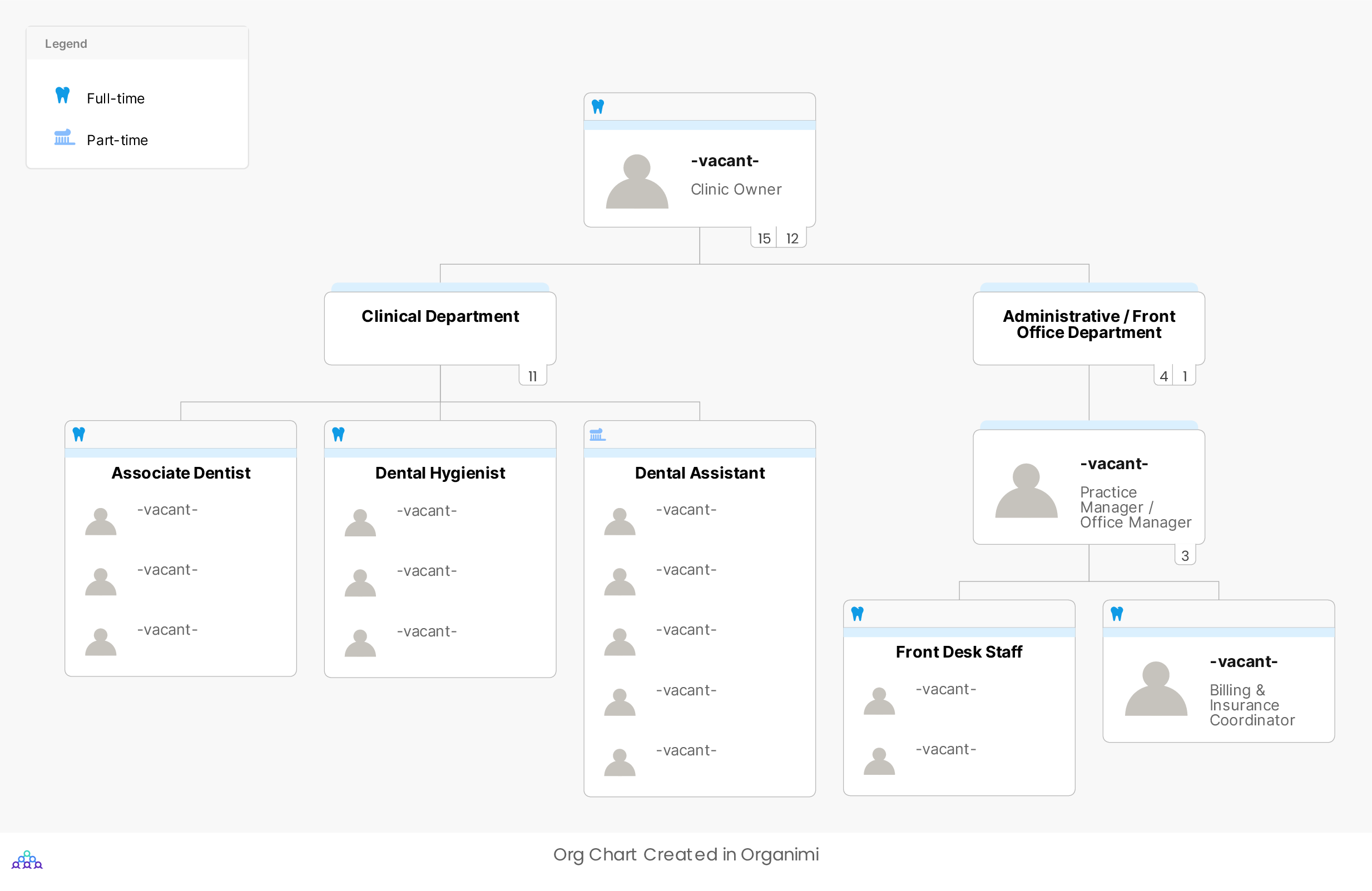
Each role within a dental clinic contributes to both clinical and operational excellence. Here are the key positions typically found in a dental clinic’s organizational chart:
Clinic Owner / Lead Dentist — The Lead Dentist is responsible for the overall direction and clinical standards of the practice. They oversee patient care, make high-level decisions, and often serve as the face of the clinic.
Associate Dentists — These are licensed dentists who treat patients under the guidance of the Lead Dentist. They focus on general or specialized care depending on their training.
Dental Hygienists — Dental hygienists perform cleanings, periodontal assessments, and patient education. They work closely with dentists to identify treatment needs.
Dental Assistants — Assistants provide chairside support during procedures, sterilize instruments, and manage patient prep. They play a vital role in clinic flow and efficiency.
Practice Manager / Office Manager — The Practice Manager handles non-clinical operations, including staff scheduling, payroll, supply ordering, and compliance. They also oversee front desk staff and patient satisfaction.
Receptionist / Front Desk Team — Responsible for scheduling, check-ins, insurance verification, and managing patient communications. They help ensure a smooth experience from start to finish.
Billing & Insurance Coordinator — Manages claims, payments, and insurance-related questions. Ensures the clinic gets reimbursed accurately and promptly.
Common Types of Dental Clinic Organizational Structures
Every dental clinic has unique needs based on its size, services, and patient volume. Here are the most commonly used organizational structures in dental practices:
Traditional Hierarchical Structure — This classic model features a clear chain of command. The Lead Dentist or Owner sits at the top, with managers and clinical staff reporting downward. It’s ideal for maintaining clear accountability in mid-to-large clinics.
Functional Structure — In this setup, the clinic is divided into departments such as clinical care, administration, and billing, each with its own supervisor. This structure is common in clinics that offer diverse services and need specialized teams.
Flat Structure — Smaller practices may opt for a flat structure with minimal layers of management. Here, most team members report directly to the Lead Dentist or Practice Manager. It promotes open communication and quick decision-making.
Steps on How to Create Your Dental Clinic Organizational Structure
Building an effective structure doesn’t have to be complicated. Here’s a step-by-step guide to get started:
Define Key Roles and Responsibilities — List all the clinical and administrative roles your clinic needs. This may include dentists, hygienists, assistants, front desk staff, and billing specialists. Be clear about what each role is responsible for.
Establish Reporting Relationships— Determine who reports to whom. Start from the top, usually the Clinic Owner or Lead Dentist, and work your way down. This step helps promote accountability and smooth communication across departments.
Choose the Right Structure Type — Select a structure that fits your clinic’s size and service scope. A flat structure might work well for a small two-chair clinic, while a larger practice may benefit from a more layered, functional approach.
Create an Organizational Chart — Use an org chart-making tool like Organimi to visually map out your structure. Include names, job titles, departments, and reporting lines. This makes your team’s responsibilities and relationships clear at a glance.
Communicate and Update — Once your org chart is ready, share it with your team. Encourage feedback, answer questions, and update the chart regularly as your clinic grows or changes roles.
In Summary
A dental clinic is more than just a healthcare provider; it’s a team-based business that relies on structure to function efficiently. A well-designed organizational structure ensures better teamwork, patient satisfaction, and business performance.
Looking to build dynamic and shareable org charts? Explore what Organimi’s org chart software can do and sign up for a free 14-day trial today!