
When you hear a siren, you know immediate help is on its way. But behind every rapid response and heroic save lies a meticulously organized system: the fire department. A well-structured fire department is the bedrock of public safety, ensuring efficient operations, clear command, and effective resource deployment.
At Organimi, we understand the power of clear organizational design. Just like any thriving business, a fire department, whether small or medium-sized, relies on a well-defined structure to succeed. Let’s explore the hierarchy that keeps our communities safe.
What Is a Fire Department Organizational Structure?
A fire department’s organizational structure serves as the framework for how tasks are divided, coordinated, and supervised within the department. It’s also a visual representation of the department’s hierarchy, showing all roles and reporting lines to make sure everyone knows their specific responsibilities. Having a clearly defined organizational structure helps the department meet operational objectives, maintain regulatory compliance, and provide efficient and effective service.
The Main Components of a Fire Department Organizational Structure
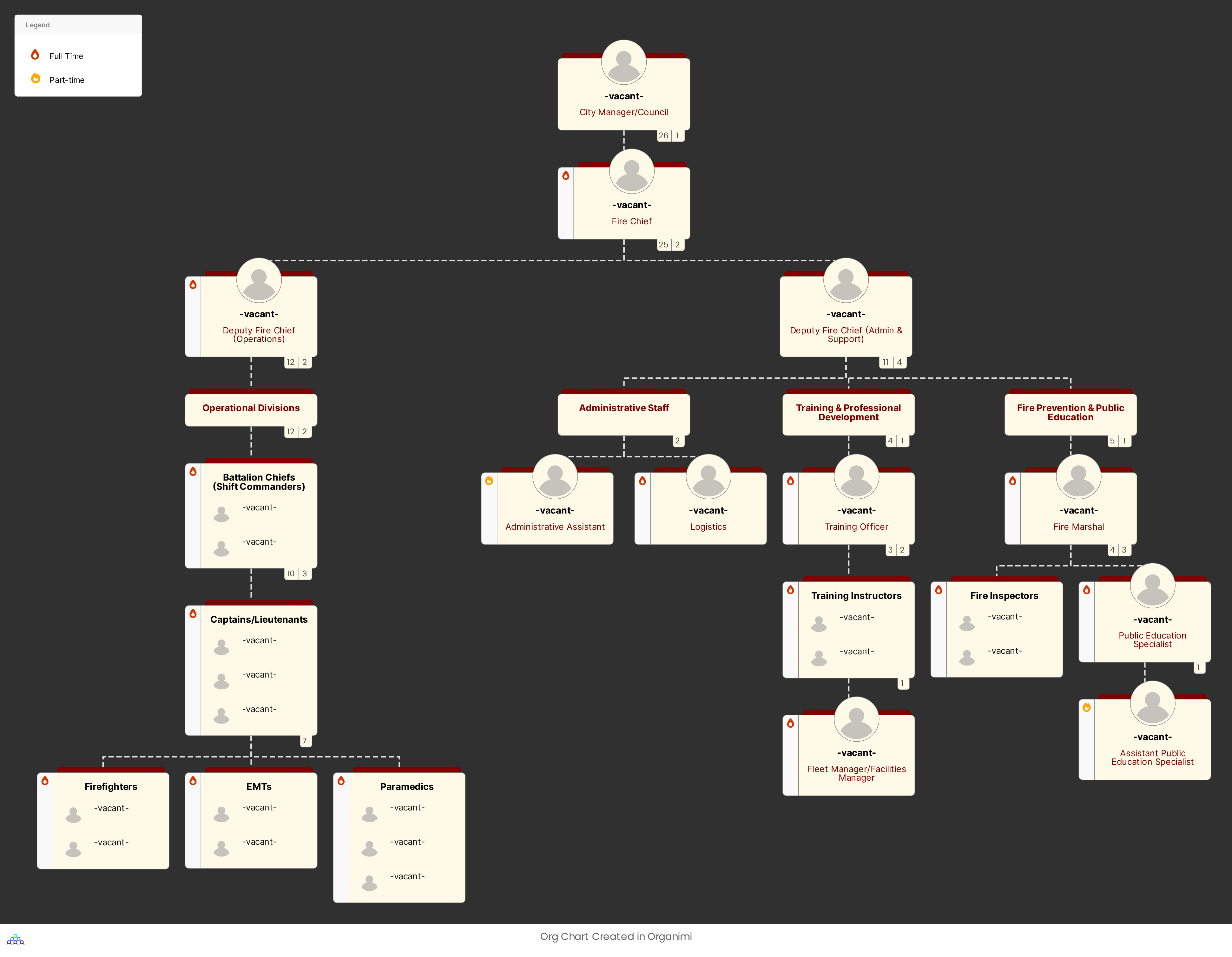
A fire department’s organizational structure divides responsibilities across several key roles, with each playing a unique part in the functioning of the department. While specific titles might vary slightly from city to city, the core functions of a small to medium-sized fire department generally follow this robust structure:
Fire Chief (Department Head) — The Fire Chief oversees all operations in the fire department. They lead the fire department team and are responsible for top-level decisions that affect the department’s direction and standards.
Deputy Fire Chief / Assistant Fire Chief (Operations) — Oversees all emergency response (fire, EMS, special ops), incident command, and operational readiness of personnel and equipment.
Deputy Fire Chief / Assistant Fire Chief (Administration & Support) — Manages administrative functions, training, fire prevention, apparatus/facility maintenance, and logistics.
Battalion Chiefs (Shift Commanders) — Manages an entire shift of personnel, acting as incident commander for larger emergencies and ensuring daily operational readiness.
Captain / Lieutenant (Company Officer — Leads a specific fire company (e.g., engine, ladder truck), supervises firefighters, and commands initial incidents.
Firefighter / Paramedic / EMT — The frontline responders, performing fire suppression, emergency medical care, apparatus operation, and participating in training.
Fire Marshal / Fire Prevention Officer (FPO) — Conducts fire inspections, investigates fire origins, enforces fire codes, and leads public fire safety education.
Training OfficerApparatus & Facilities Manager — Oversees the maintenance and repair of all fire apparatus, vehicles, and fire station facilities.
Administrative Coordinator / Logistics — Handles general office administration, records, procurement of supplies, and inventory management.
The Different Types of Fire Department Organizational Structures
Just as different types of pharmacies adopt varying organizational structures to suit their operations, fire departments can also use different models:
Traditional Structure — This structure has a clear chain of command, with decision-making flowing from the Fire Chief at the top down to the staff on the front lines. It’s typically used by larger departments where strict control and formal reporting lines simplify complex operations.
Functional Structure — This structure divides the department into divisions based on roles, such as suppression, EMS, training, or prevention. Each department is led by a manager who reports to a Deputy Chief. This is ideal for fire departments needing specialized teams to focus on distinct areas of operation.
Divisional Structure — The divisional structure organizes the department into divisions that could be based on geographic regions or specialized service lines. Each division is supervised by a division manager and functions with a level of autonomy. Large fire departments covering vast areas or with highly specialized units might use this structure to allow for tailored strategies for different needs.
Steps on How to Create Your Fire Department Organizational Structure
Follow this step-by-step guide on how to create a well-defined organizational structure for your fire department:
List Down Key Roles and Functions — Start by determining the essential roles and functions needed for your fire department to operate smoothly. These usually include emergency response, community engagement, training, and equipment management. Next, identify all the key roles within these departments by clearly defining each of their responsibilities. This step helps make sure all critical aspects of your fire department are efficiently managed to meet your department’s goals.
Delineate the Reporting Relationships — Starting from the top, decide who holds decision-making authority. From the Fire Chief going down, outline the reporting lines. This helps reduce confusion and promote accountability, which helps teams or departments collaborate more efficiently.
Pick the Right Organizational Structure — Your structure will serve as the foundation for how your fire department will achieve its operational objectives. Consider your department’s size, operational needs, and goals so that you can select the most suitable organizational structure.
Create Your Organizational Chart — Using an org chart-making tool, such as Organimi, create a detailed org chart that represents your fire department’s structure. Make sure to include all roles and their reporting relationships to help everyone understand their role within the organization.
Implement and Share Your Organizational Chart — With your org chart finalized, it’s time to communicate it to all your staff and relevant stakeholders. Encourage questions and feedback to ensure the org chart remains clear and cohesive. Regularly update your chart to reflect any operational changes or shifts in your department.
In Summary
A fire department is an important part of our community safety system, making sure residents are protected and emergencies are managed effectively. A well-planned organizational structure is beneficial to a fire department’s goals as it helps ensure efficient operations and effective service delivery.
Looking to build dynamic and shareable org charts? Explore what Organimi’s org chart software can do and sign up for a free 14-day trial today!