

Engineering teams are the backbone of innovation and product development across industries. From building complex software systems to designing large-scale infrastructure, engineers turn ideas into reality. But for these teams to operate effectively and deliver high-quality results, they need a clear and efficient organizational structure.
An organized engineering department not only improves productivity but also enhances collaboration, speeds up decision-making, and aligns engineering goals with broader business objectives.
What Is an Engineering Department Organizational Structure?
An engineering department’s organizational structure outlines how roles, responsibilities, and workflows are distributed within the engineering team. It defines who reports to whom, how teams are grouped, and how work is delegated.
This structure provides a visual representation of how the engineering department functions within an organization. It helps streamline operations, promote accountability, and ensure that everyone, from junior engineers to senior leadership, understands their role in the bigger picture.
The Main Components of an Engineering Department Organizational Structure
The structure of an engineering department often includes a mix of leadership, specialized teams, and cross-functional contributors. Here’s a breakdown of the key roles:
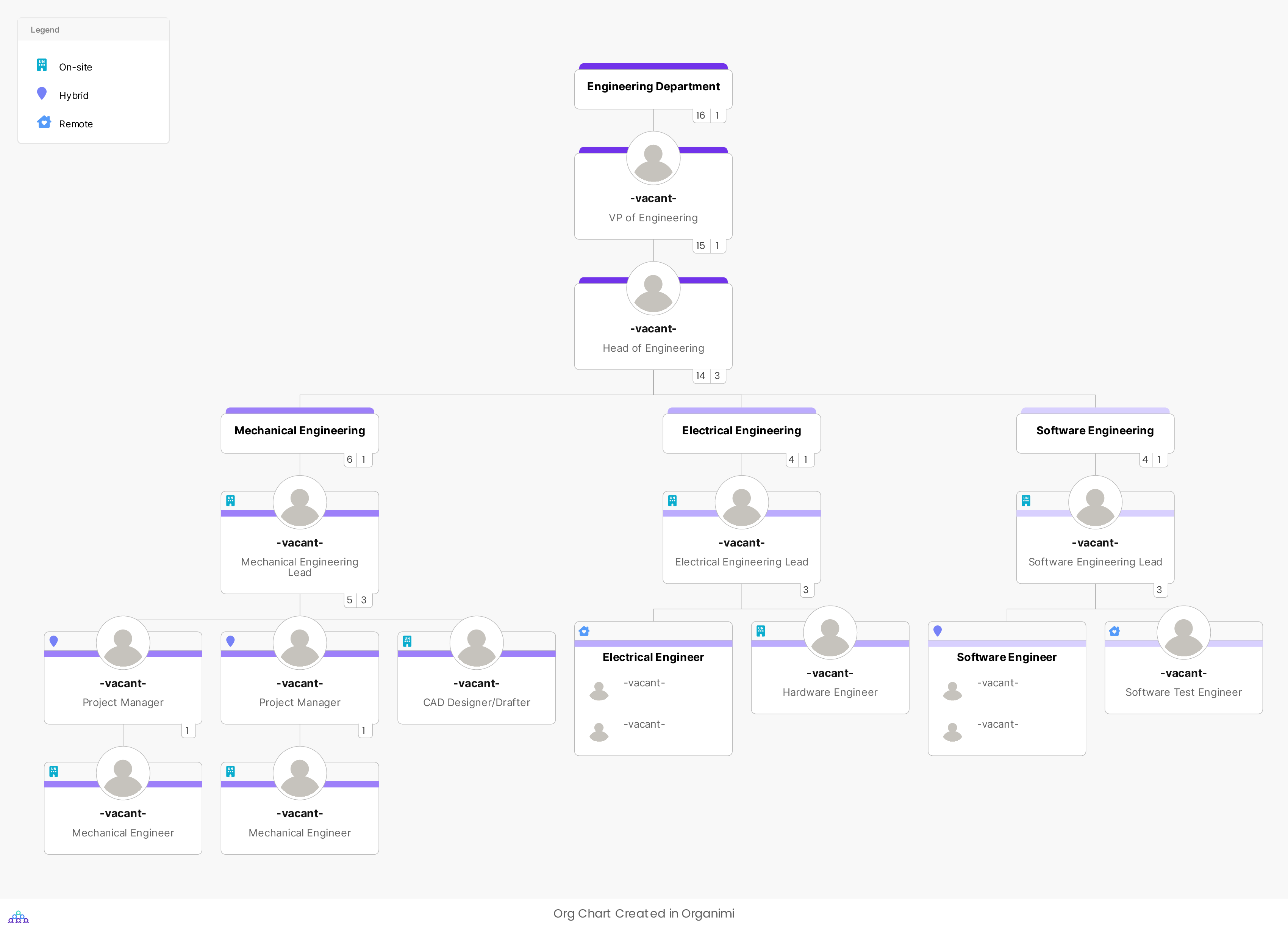
Chief Technology Officer (CTO) / VP of Engineering — At the top of the hierarchy, the CTO or VP of Engineering sets the technical vision, oversees strategy, and ensures the engineering team supports company-wide goals. They often sit on the executive team.
Engineering Director / Head of Engineering — Reporting to the CTO, this person is responsible for day-to-day operations, people management, and technical oversight. They coordinate multiple teams and ensure that project timelines and technical standards are met.
Engineering Managers / Team Leads — Engineering Managers oversee specific teams or domains (e.g., frontend, backend, infrastructure). They manage team performance, mentor engineers, and collaborate with product or design leads.
Software Engineers / Mechanical Engineers / Electrical Engineers — Depending on the industry, these engineers are responsible for building, testing, and maintaining systems or products. They work on technical tasks assigned by their managers and contribute directly to innovation and product development.
QA Engineers / Test Engineers — Focused on quality assurance, these professionals test products, identify bugs, and ensure everything meets functional and safety standards.
Types of Engineering Department Organizational Structures
Engineering departments can vary greatly in size and complexity, so choosing the right structure depends on the company’s needs. Here are the most common formats:
Functional Structure — In this traditional model, teams are grouped by specialty (e.g., frontend, backend, QA). Each function has its own manager and reports up through a common chain. Ideal for companies with well-defined technical silos.
Matrix Structure — Engineers report to both a functional lead (like a backend manager) and a project manager or product lead. This allows for flexibility and collaboration across projects but requires clear communication and conflict resolution practices.
Flat Structure — Common in startups and small engineering teams, a flat structure has fewer levels of hierarchy. Engineers work more independently and often take on broader roles. This can speed up decision-making and innovation, but may cause role confusion if not managed properly.
Product-Based Structure — Engineering teams are organized around specific products or features. Each product team includes cross-functional members such as developers, QA, and DevOps engineers. This structure supports agile development and customer-focused delivery.
How to Create Your Engineering Department Organizational Structure
Creating a structure tailored to your engineering department will help drive efficiency, clarity, and innovation. Here’s a step-by-step guide to get started:
Define Your Core Functions and Roles — Start by identifying what your engineering team is responsible for, such as product development, testing, infrastructure, and support, and outline the roles needed within each function.
Clarify Responsibilities and Reporting Lines — Assign clear responsibilities to each role and establish reporting relationships. For example, software engineers might report to an Engineering Manager, who reports to the Director of Engineering.
Choose the Best-Fit Structure — Consider your organization’s size, complexity, and goals. A small startup might benefit from a flat structure, while a large enterprise may require a functional or matrix model to support its scale.
Create a Visual Org Chart — Use Organimi to build a professional org chart that maps out your engineering department. Be sure to include names, titles, departments, and reporting lines. This visual aid will help improve transparency and alignment.
Build Your Organizational Chart — Use a tool like Organimi to create a visual org chart that maps out your structure. Include names, titles, departments, and reporting lines to make your chart both informative and easy to understand.
Share and Maintain the Org Chart — Distribute the chart to your team and key stakeholders. Keep it updated as your department evolves with new hires, promotions, or restructures.
In Summary
A well-defined organizational structure is essential for engineering teams to thrive. Whether you’re developing software, hardware, or hybrid systems, the right structure supports innovation, efficiency, and collaboration. From functional hierarchies to agile product squads, there’s no one-size-fits-all approach—but there is a right fit for your team.
Looking to build dynamic and shareable org charts? Explore what Organimi’s org chart software can do and sign up for a free 14-day trial today!