

A university is a complex organization. To be successful, it needs to operate efficiently and be able to provide great educational programs and a positive student experience.
An important aspect for a higher education institution is having a clearly defined organizational structure. Aside from streamlining operations, a clear structure helps improve team communication and ensures the university stays on track with its mission and goals.
What Is a University Organizational Structure?
A university’s organizational structure serves as the framework for how tasks are divided and supervised within the institution.
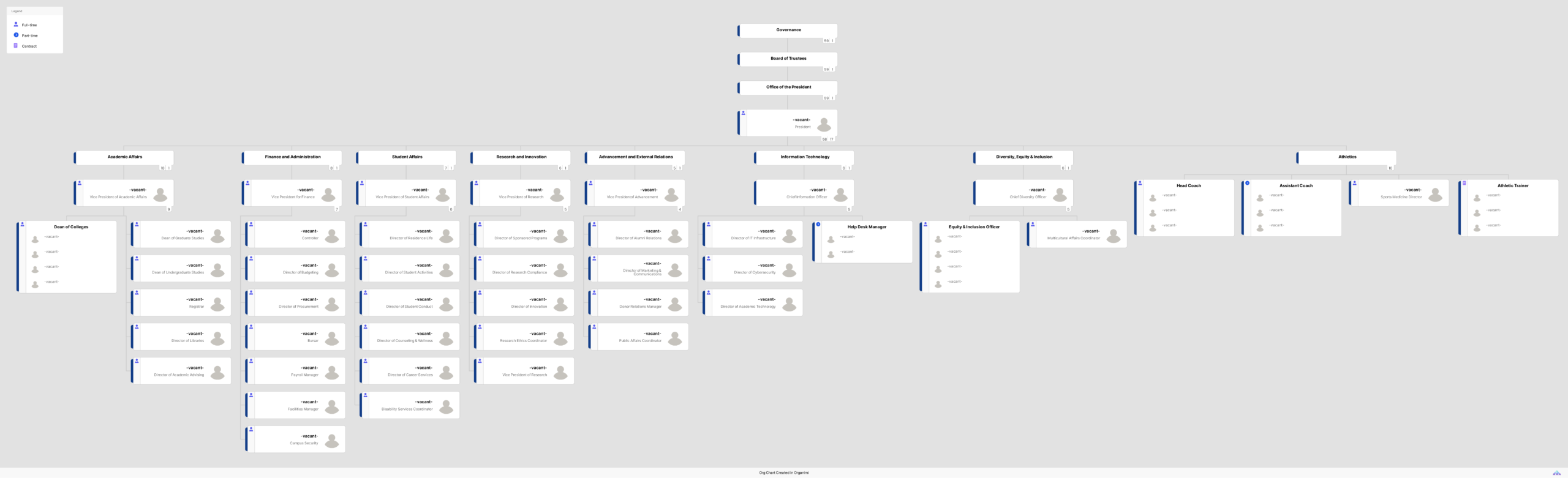
It’s also a visual representation of the university’s hierarchy, showing all roles and reporting lines to ensure everyone knows their specific responsibilities. Having a clearly defined organizational structure enables the institution to meet its business and academic objectives, providing efficient and effective service to students and faculty alike.
The Main Components of a University Organizational Structure
A university’s organizational structure divides responsibilities across several key roles, with each playing a unique part in the functioning of the institution.
President — The President oversees all operations in the institution. They lead the university team and are responsible for top-level decisions that affect the institution’s direction and standards.
Vice Presidents — They handle specific administrative areas like student affairs, finance, and advancement. They work closely with the President to ensure the university’s non-academic functions are running smoothly.
Deans — Deans lead individual universities or schools within the university. They are responsible for managing faculty, programs, and budgets within their specific academic unit.
Alumni Relations — This department, often led by a Vice President, focuses on engaging with former students and raising funds for the institution. They organize alumni events, manage fundraising campaigns, and maintain strong relationships with donors to support the university’s financial health and future initiatives.
The Different Types of University Organizational Structures
Universities adopt different organizational structures to better suit their operations and academic goals. Here are commonly used structures in higher education:
Traditional/Hierarchical Structure — This structure has a clear chain of command, with decision-making coming from the top and flowing down through the Provost, Deans, and Department Chairs. It is usually used by larger universities where strict control and formal reporting lines are needed to manage complex operations.
Governance Structure — This structure involves collaborative decision-making among different groups, such as the administration, faculty, and students. Committees and senates are used to share authority and create a more democratic environment.
Matrix Structure — This structure combines elements of the traditional hierarchy with a project-based approach. For example, a faculty member might report to their department chair but also to a program director for a specific research initiative. This structure is often used for interdisciplinary projects and research centers.
Steps on How to Create a University Organizational Structure
Follow this step-by-step guide on how to create a well-defined organizational structure for your institution:
List Down Key Roles and Functions — Start by determining the essential roles and functions needed for your institution to operate smoothly. These usually include academic affairs, student services, finance, and admissions. Next, identify all the key roles within these areas by clearly defining each of their responsibilities.
Delineate the Reporting Relationships — Starting from the top, decide who holds decision-making authority. From the President going down, outline the reporting lines. This helps reduce confusion and promote accountability, which helps departments and teams collaborate more efficiently.
Pick the Right Organizational Structure — Your structure will serve as the foundation for how your institution will achieve its operational and academic objectives. Consider your institution’s size, operational needs, and goals so that you can select the most suitable organizational structure.
Create Your Organizational Chart — Using a tool like Organimi, create a detailed org chart that represents your university’s structure. Make sure to include all roles and their reporting relationships to help everyone understand their place within the organization.
Implement and Share Your Organizational Chart — With your university org chart finalized, it’s time to communicate it to all your staff and relevant stakeholders. Encourage questions and feedback to ensure the org chart remains clear and cohesive. Regularly update your chart to reflect any operational changes or shifts.
In Summary
A university is an important part of our society, ensuring students get the right education and experience for a better future. A well-planned higher education organizational structure is beneficial to an institution’s goals as it helps ensure efficient operations and effective service delivery to everyone involved.
Looking to build dynamic and shareable org charts? Explore what Organimi’s org chart software can do and sign up for a free 14-day trial today!