

Behind every great soccer team is a solid organizational structure that keeps things running smoothly, both on and off the field. Much like any successful organization, a soccer team needs to have clear roles, efficient communication, and a defined hierarchy to achieve its goals. A well-built organizational structure helps ensure that every player, coach, and staff member knows their responsibilities, helping the team perform at its best.
What Is a Soccer Team Organizational Structure?
A soccer team’s organizational structure lays out how different roles within the team are assigned and how various responsibilities are distributed. It’s essentially a blueprint that defines how your team functions.
This structure includes everyone from players and coaches to support staff and administrative personnel. It helps streamline decision-making, improve communication, and make sure nothing falls through the cracks, especially during busy game seasons or tournaments.
The Main Components of a Soccer Team Organizational Structure
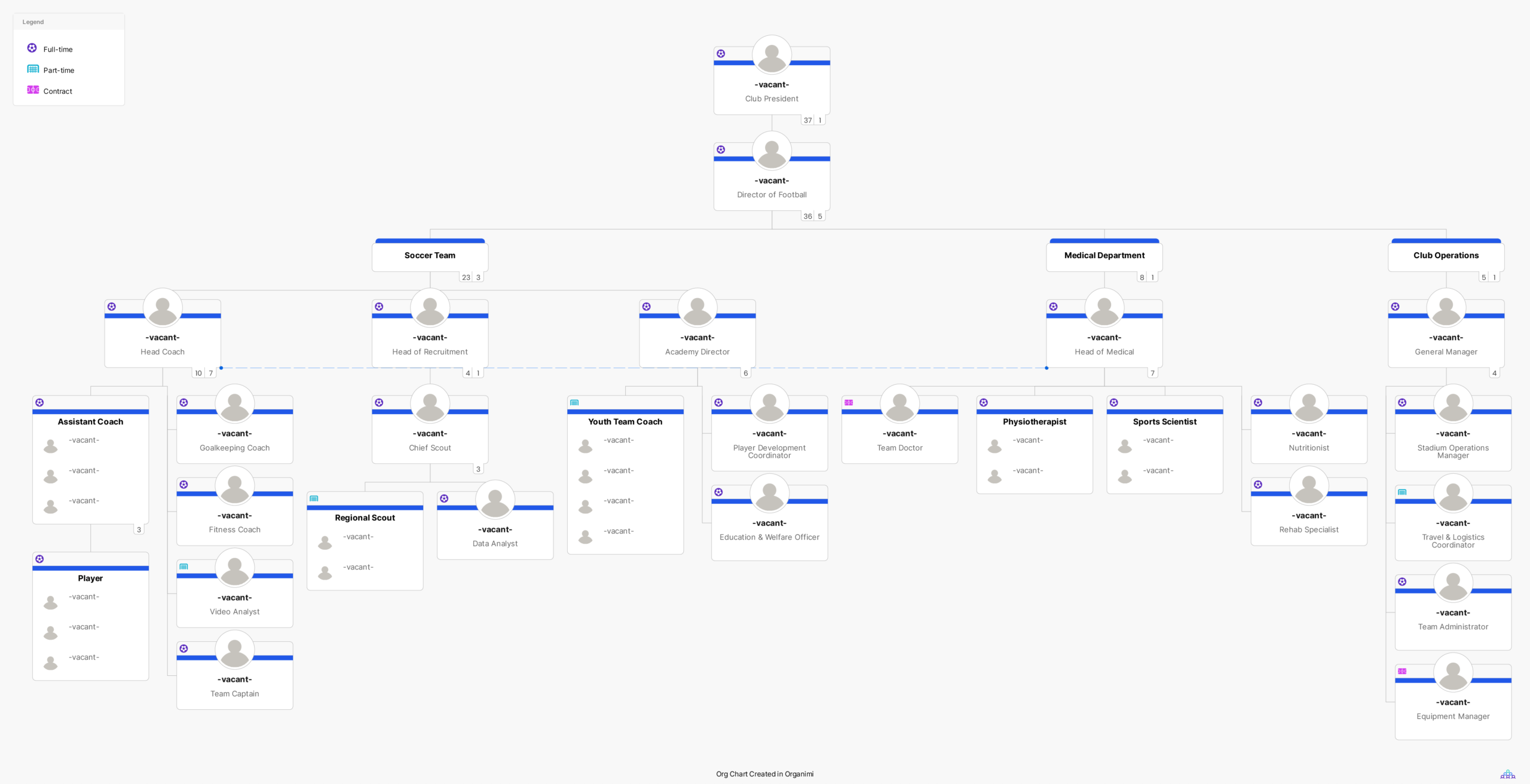
Any soccer team, regardless of its size, relies on a core set of roles to operate effectively. Here is a breakdown of some key positions in a typical soccer team org structure:
Club President / Team Owner — This is the top-level leader responsible for overseeing the team’s strategic direction and long-term goals. In professional or semi-pro clubs, the President or Owner also handles financial backing, sponsorships, and high-level hiring decisions.
Director of Football — Reporting directly to the President or Owner, the Director of Football manages the team’s roster, scouting, contracts, and transfer negotiations. They work closely with the coaching staff to build a competitive squad.
Head Coach — The Head Coach leads training, game strategy, and player development. They’re the face of the team on the sidelines and are ultimately responsible for on-field performance.
Assistant Coaches — These individuals specialize in areas like fitness, goalkeeping, or tactics. They support the Head Coach in preparing the team and analyzing performance.
Team Captain — Usually a senior or standout player, the Team Captain acts as a bridge between the coaching staff and players. They lead by example, motivate teammates, and represent the team on the field.
Players — The core of any soccer team, players are grouped by position: goalkeepers, defenders, midfielders, and forwards. Each player brings unique skills and responsibilities to the squad.
Medical & Support Staff — This includes physiotherapists, athletic trainers, nutritionists, and psychologists who ensure players are in peak physical and mental condition.
Types of Soccer Team Organizational Structures
Different teams may adopt different org structures based on size, resources, and competition level. Here are the most common types:
Hierarchical Structure — Used by professional and semi-professional clubs, this structure has a clear chain of command. Decisions flow from the director down to the coaching staff, players, and support teams.
Flat Structure — More common in community or recreational leagues, a flat structure has fewer management layers. Coaches and players may take on multiple roles, and decision-making is often shared or collaborative.
Functional Structure — This divides the team into specialized departments, each with its own lead. It’s an efficient model for clubs with a wider scope of operations beyond just playing matches.
How to Build a Soccer Team Organizational Structure
Looking to build or refine your soccer team’s structure? Follow these steps to get started:
Identify Key Roles and Responsibilities — Start by listing all the functions your team needs to succeed, for example, coaching, player development, logistics, health, and operations. Then, define each role and what they’re accountable for.
Establish a Clear Chain of Command — Determine who reports to whom. For example, Assistant Coaches report to the Head Coach, who in turn reports to the General Manager. This creates clarity and accountability within your chart.
Choose the Right Structure for Your Team — Select a structure that fits your team’s size, goals, and complexity. Smaller teams may benefit from a flat structure, while larger or more competitive clubs may need a hierarchical or functional model.
Create a Visual Org Chart — Use a tool like Organimi to map out your structure visually. This helps everyone on your team to understand where they fit and how the team operates.
Share and Update Regularly — Once your org chart is ready, share it with your team and stakeholders. Keep it up to date as new members join, roles shift, or team strategies evolve.
In Summary
A soccer team is a network of roles and responsibilities that work together to bring home wins and build a strong culture. A clear organizational structure helps teams stay aligned, reduce confusion, and perform at their highest level, contributing to team success.
Looking to build dynamic and shareable org charts? Explore what Organimi’s org chart software can do and sign up for a free 14-day trial today!