

A real estate business is more than just agents selling homes; it is a multifaceted operation that requires a strong organizational foundation to run efficiently. From client relations to marketing, finance, and legal compliance, every function must work together seamlessly. To ensure this happens, every real estate company needs a clearly defined organizational structure.
A thoughtful org structure helps real estate teams stay aligned, streamline operations, and scale more effectively.
What Is a Real Estate Organizational Structure?
A real estate organizational structure outlines how a real estate company is organized in terms of roles, responsibilities, and reporting relationships. It serves as a framework for decision-making, communication, and task management.
Often visualized through an organizational chart, the structure identifies who does what and who reports to whom, making it easier to run day-to-day operations, set goals, and ensure compliance with industry standards.
The Main Components of a Real Estate Organizational Structure
While structures may vary depending on company size and services offered, most real estate companies include the following key roles:
Chief Executive Officer (CEO) — The CEO is the top executive responsible for the overall vision, strategy, and performance of the company. They oversee all departments and ensure the organization stays aligned with its long-term goals.
Chief Financial Officer (CFO) — The CFO is responsible for managing the company’s financial health. This includes long-term financial strategy, regulatory compliance, and ensuring fiscal discipline across the organization.
Director of Residential Sales— Leads the brokerage’s residential sales division. This person is responsible for agent performance, recruiting, and hitting sales targets across home buying and selling transactions. They also work closely with Marketing to promote listings and with Finance to track commissions and performance metrics.
Director of Commercial Sales — Oversees all commercial real estate transactions, including office, retail, and industrial property sales. Focuses on building relationships with commercial buyers, investors, and corporate clients. Ensures sales staff are trained on zoning, valuations, and contract structuring specific to commercial deals.
Director of Property Management — Responsible for managing rental portfolios, including residential and commercial buildings, to ensure tenant satisfaction, lease compliance, and building maintenance. Implements systems for rent collection, maintenance coordination, and property inspections.
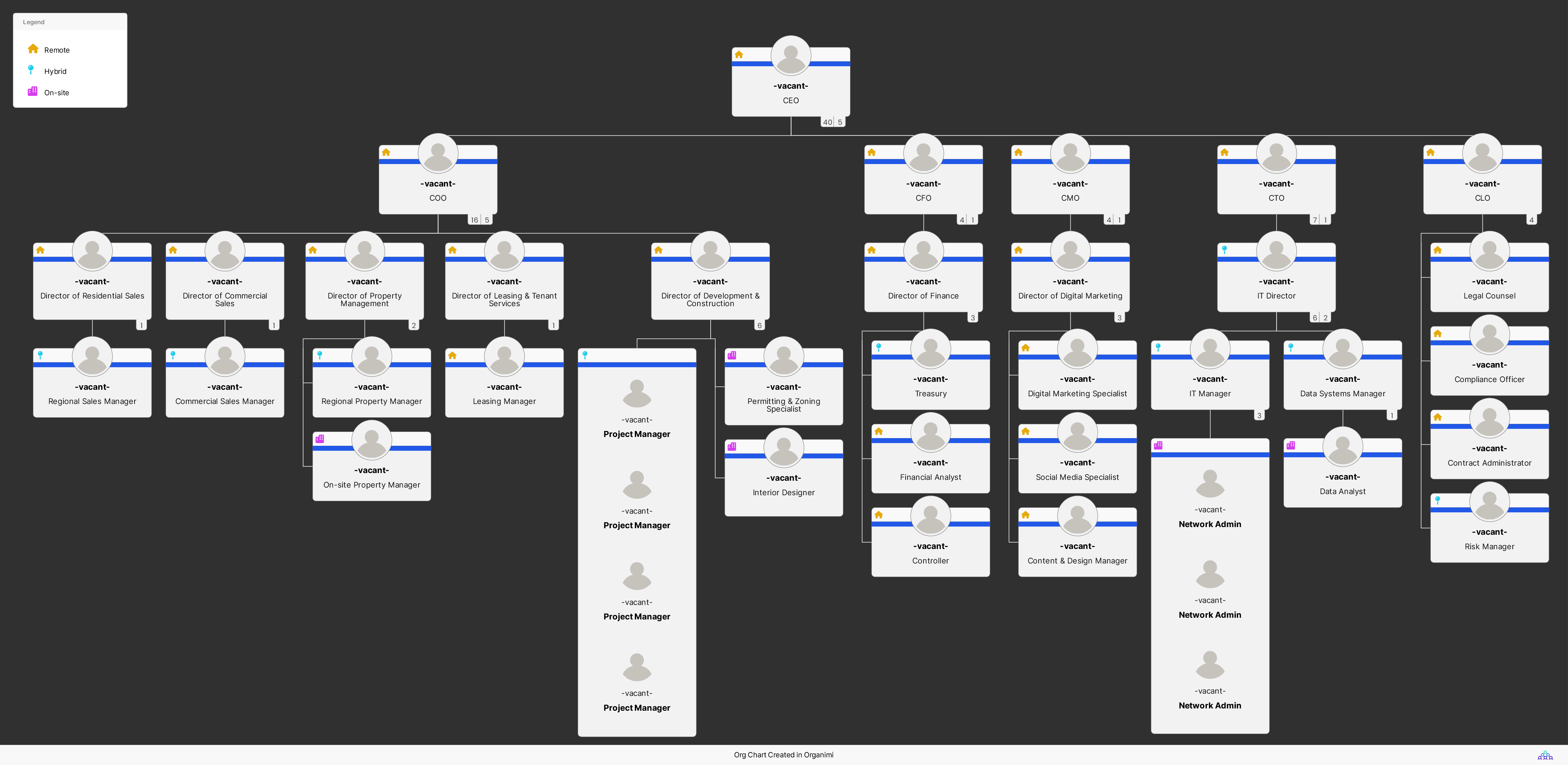
Common Real Estate Organizational Structures
Real estate companies can structure their teams in various ways depending on their business model. Here are the most common ones:
Traditional/Hierarchical Structure — This is the classic top-down model. The CEO is at the top, followed by the Directors, agents, and support staff. Best for companies that value structure, compliance, and supervision.
Team-Based Structure — Agents are grouped into teams under a lead agent or team leader. Each team handles its own sales, marketing, and transaction coordination. Often used by large firms or top-producing agents.
Functional Structure — Departments are divided by function, sales, marketing, admin, finance, etc. Ideal for full-service firms with in-house marketing or property management.
Flat Structure — Smaller brokerages may operate with a flat model where most staff report directly to the Broker. This approach encourages collaboration and flexibility but may lack clear oversight as the company grows.
How to Create Your Real Estate Organizational Structure
Whether you’re launching a new brokerage or restructuring an existing team, here is a quick guide to building your org structure:
Identify Core Functions and Roles — Start by outlining the main areas your business covers such as sales, marketing, transactions, finance, and operations. Then, define specific roles within each function and what each one is responsible for.
Map Out Reporting Relationships — Determine who reports to whom and where decision-making authority lies.
Choose the Right Structural Model — Pick a structure that fits your size and business style. If you’re focused on building agent teams, a team-based structure might make the most sense. For a small operation, a flat or functional structure may be more efficient.
Build Your Organizational Chart — Use a tool like Organimi to visually create your org chart. Include all roles, team groupings, and reporting lines so that it is easy to understand.
Share & Maintain Your Org Chart — Once finalized, share your org chart with staff, agents, and stakeholders. Update it regularly as roles change or new team members are added.
In Summary
Behind every successful real estate business is a strong organizational foundation. A well-planned structure brings clarity to roles, streamlines operations, and improves both employee satisfaction and client service.
Whether you’re a solo broker building a team or an established agency looking to scale, a clearly defined organizational structure can be a game-changer.
Looking to build dynamic and shareable org charts? Explore what Organimi’s org chart software can do and sign up for a free 14-day trial today!