
Quality assurance is the backbone of any organization that values consistency, safety, and trust. Whether you’re building software, manufacturing products, or delivering services, QA teams help make sure standards are met and problems are caught before they reach customers.
For quality assurance to work effectively, it needs more than tools and checklists. It needs a clearly defined organizational structure. A strong QA structure improves accountability, supports compliance, streamlines processes, and helps teams work together to deliver reliable, high-quality outcomes.
What Is a Quality Assurance Organizational Structure?
A quality assurance organizational structure defines how QA responsibilities are divided, managed, and supervised across an organization.
It visually outlines the QA hierarchy, showing roles, reporting relationships, and areas of ownership. With a clear structure in place, QA teams can operate more efficiently, maintain regulatory and internal standards, and respond quickly when quality issues arise.
The Main Components of a Quality Assurance Organizational Structure
A QA organizational structure typically includes several core roles, each focused on a specific aspect of quality management.
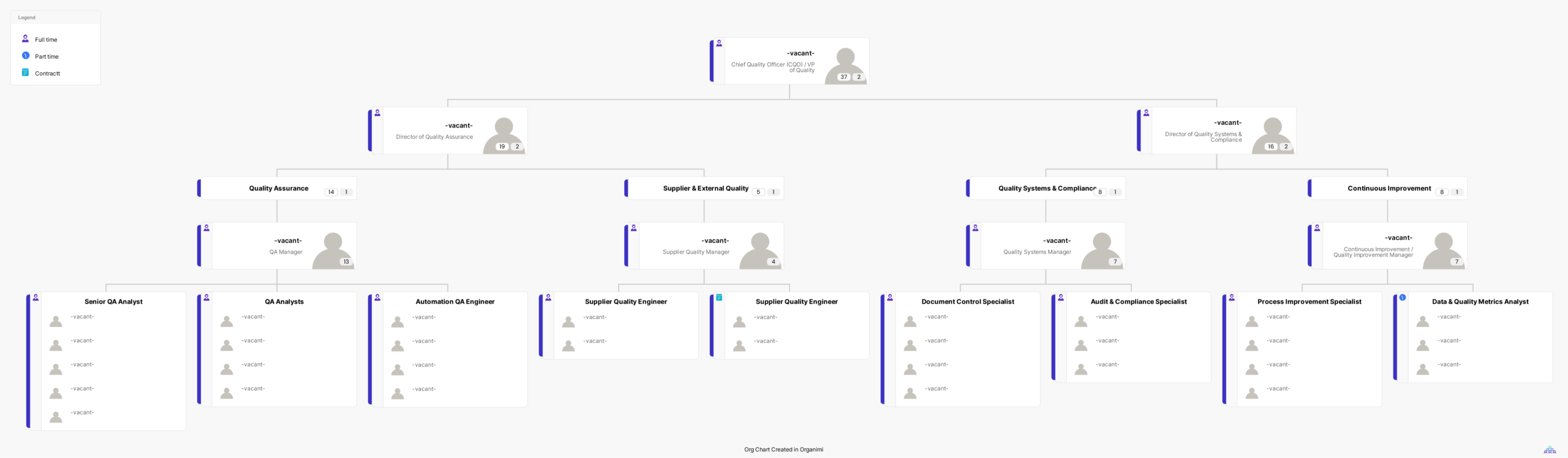
Chief Quality Officer (CQO) or VP of Quality — The CQO sets the overall quality vision and strategy. They are responsible for quality governance, regulatory alignment, and ensuring quality is embedded across the organization. This role usually reports to the CEO or COO.
Director of Quality Assurance — The Director of QA oversees day-to-day quality assurance activities. They manage QA teams, define testing and review processes, and ensure quality standards are consistently applied across products or services. Reports to the CQO or VP of Quality.
Quality Assurance Manager — QA Managers handle execution. They assign workloads, oversee testing or inspections, and ensure issues are documented and addressed. They often manage QA analysts, engineers, or technicians.
QA Analysts / Engineers — These roles are responsible for performing tests, inspections, and reviews. They document defects, verify fixes, and help prevent quality issues before release.
Quality Systems & Compliance Roles — These team members manage documentation, audits, and quality management systems (QMS). Their work ensures the organization remains compliant with internal policies and external regulations.
The Different Types of Quality Assurance Organizational Structures
Organizations structure their QA teams differently depending on size, industry, and regulatory needs. Here are the most common QA organizational structures:
Traditional Hierarchical Structure — This structure has a clear chain of command, with decisions flowing from senior quality leaders down to managers and specialists. It’s common in regulated industries where strong oversight and formal approvals are required.
Functional Structure — In a functional QA structure, teams are grouped by specialty, such as testing, compliance, or continuous improvement. Each function is led by a manager who reports to a quality director. This model works well for organizations with specialized QA needs.
Matrix Structure — QA professionals are embedded within product or operational teams while still reporting into a central QA function. This approach improves collaboration and speeds up issue resolution, especially in agile or fast-moving environments.
Steps on How to Create Your Quality Assurance Organizational Structure
Follow these steps to design a QA organizational structure that supports both quality and growth:
List Your Key Quality Functions — Start by identifying what QA is responsible for in your organization. This may include testing, inspections, audits, compliance, documentation, and continuous improvement.
Define Roles and Responsibilities — Clearly outline each QA role and what it owns. This helps eliminate overlaps and gaps while making accountability clear across the team.
Establish Reporting Relationships — Decide who makes quality decisions and how information flows. Clear reporting lines help QA teams escalate issues quickly and work effectively with other departments.
Choose the Right Structure — Select a structure that fits your organization’s size, industry, and risk profile. A startup may need a lean, centralized QA team, while a regulated enterprise may require multiple specialized QA functions.
Create Your Organizational Chart — Use an org chart tool to such as Organimi to visualize your QA structure. Include all roles, departments, and reporting lines so everyone understands how quality is managed.
Share and Maintain the Chart — Communicate the org chart across the organization and update it regularly as roles, regulations, or processes change.
In Summary
Quality assurance plays a critical role in protecting customers, strengthening operations, and supporting long-term success. A clearly defined QA organizational structure helps teams work efficiently, stay compliant, and maintain consistent standards across the organization.
Looking to build dynamic and shareable org charts? Explore what Organimi’s org chart software can do and sign up for a free 14-day trial today!