
More than just moving goods and people, public transportation is the backbone of global commerce and daily life. For a public transportation company to be considered successful, it needs to operate efficiently and be able to provide reliable service. An important ingredient to an efficient public transportation company is having a clearly defined organizational structure. Aside from streamlining operations, a clear structure helps keep the company compliant with regulations, improves team communication, and enhances the overall quality of service delivered.
What Is a Public Transportation Organizational Structure?
A public transportation organizational structure serves as the framework for how tasks are coordinated and supervised within the company. It’s also a visual representation of the company’s hierarchy, showing all roles and reporting lines to make sure everyone knows their specific responsibilities. Having a clearly defined organizational structure helps the company meet business objectives, maintain regulatory compliance, and provide efficient and effective service.
The Main Components of a Public Transportation Organizational Structure
A public transportation company’s organizational structure divides responsibilities across several key roles, with each playing a unique part in the functioning of the company.
Director of Operations — The Director of Operations oversees all operational aspects of the public transportation company. They lead the team and are responsible for top-level decisions that affect the company’s direction and standards.
Logistics Manager — The Logistics Manager is in charge of the day-to-day operations, such as managing routes, scheduling, and ensuring customer satisfaction. They typically report directly to the Director of Operations.
Fleet Managers — They’re responsible for overseeing the company’s vehicles, including maintenance, repairs, and ensuring the fleet is in optimal condition. They work closely with Dispatchers and Drivers to ensure smooth operations.
Dispatchers — Dispatchers support the Logistics Manager by coordinating vehicle movements, assigning tasks to drivers, and ensuring timely deliveries. They manage communications and record all movements.
Drivers — They are responsible for the safe and timely public transport of goods or passengers, handling vehicle operations, and ensuring compliance with traffic regulations. They assist in maintaining efficient operations by adhering to schedules and reporting issues.
The Different Types of Public Transportation Organizational Structures
Public transportation companies adopt different organizational structures to better suit their operations and service goals. Here are the commonly used transportation organizational structures:
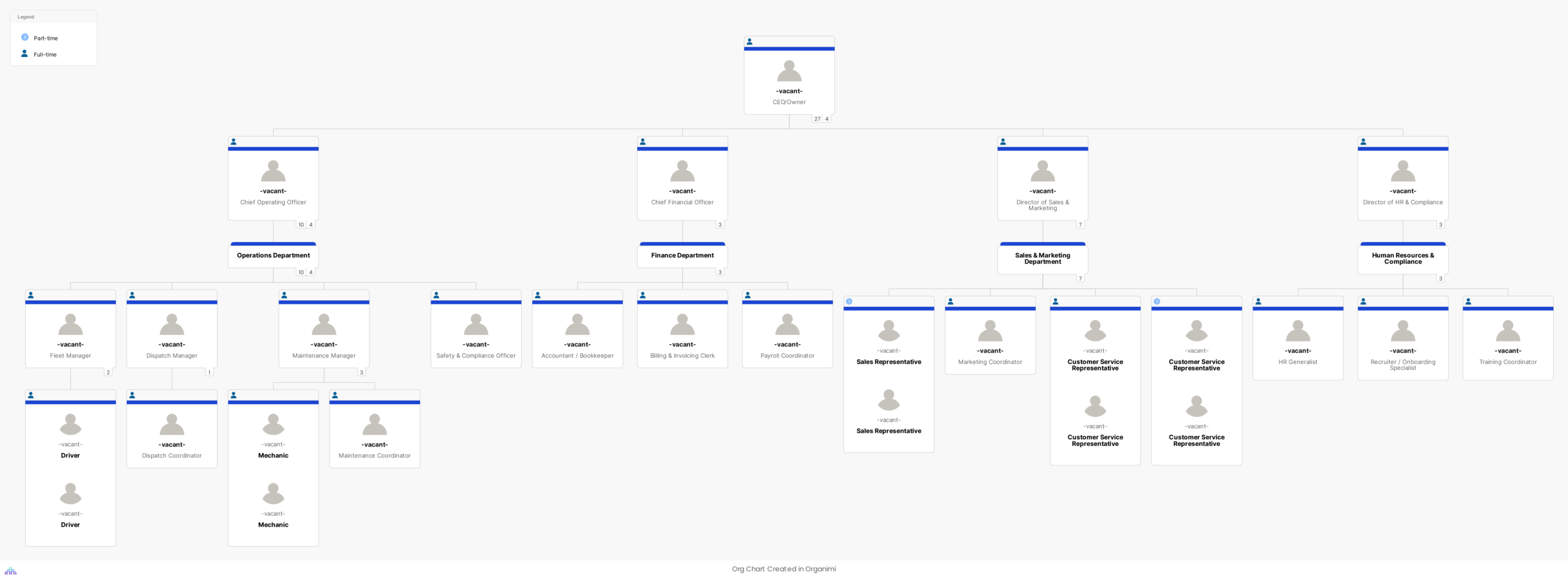
Traditional Structure — This structure has a clear chain of command, with decision-making coming from the Director of Operations at the top and flowing down to the staff on the ground. It’s usually used by larger public transportation companies where strict control and formal reporting lines simplify complex operations.
Functional Structure — This structure divides the company into departments based on roles, such as dispatch, fleet maintenance, and customer service. Each department is led by a manager who reports to the Logistics Manager. Ideal for companies needing specialized teams to focus on distinct areas of operation.
Divisional Structure — The divisional structure organizes the company into divisions that could be based on service lines (e.g., freight, passenger), geographical locations, or customer type. Each division is supervised by a division manager and functions with a level of autonomy. Large public transportation conglomerates sometimes use this structure to allow for tailored strategies for different markets or regions.
Steps on How to Create Your Public Transportation Organizational Structure
Follow this step-by-step guide on how to create a well-defined organizational structure for your public transportation company:
List Down Key Roles and Functions — Start by determining the essential roles and functions needed for your company to operate smoothly. These usually include logistics, fleet management, dispatch, and compliance. Next, identify all the key roles within these departments by clearly defining each of their responsibilities. This step helps make sure all critical aspects of your company are efficiently managed to meet your goals.
Delineate the Reporting Relationships — Starting from the top, decide who holds decision-making authority. From the Director of Operations going down, outline the reporting lines. This helps reduce confusion and promote accountability, which helps teams or departments collaborate more efficiently.
Pick the Right Organizational Structure — Your structure will serve as the foundation for how your company will achieve its operational objectives. Consider your company’s size, operational needs, and goals so that you can select the most suitable organizational structure.
Create Your Organizational Chart — Using a dedicated org chart-making tool such as Organimi, create a detailed org chart that represents your company’s structure. Make sure to include all roles and their reporting relationships to help everyone understand their role within the organization.
Implement and Share Your Organizational Chart — With your org chart finalized, it’s time to communicate it to all your staff and relevant stakeholders. Encourage questions and feedback to ensure the org chart remains clear and cohesive. Regularly update your chart to reflect any operational changes or shifts in your company.
In Summary
A public transportation company is a vital part of our economy, ensuring goods and people get where they need to go. A well-planned organizational structure is beneficial to a company’s goals as it helps ensure efficient operations and effective service delivery.
Looking to build dynamic and shareable org charts? Explore what Organimi’s org chart software can do and sign up for a free 14-day trial today!