

A public school is more than just classrooms and textbooks. It’s a complex institution that shapes young minds and prepares students for their future. For a school to succeed, it needs strong leadership, clear communication, and well-defined roles across all departments. An essential tool for achieving this is a well-structured organizational chart.
A clearly defined public school organizational chart helps streamline operations, improves collaboration between departments, ensure accountability, and creates a transparent environment where everyone understands their role in supporting student success.
What Is a Public School Organizational Structure?
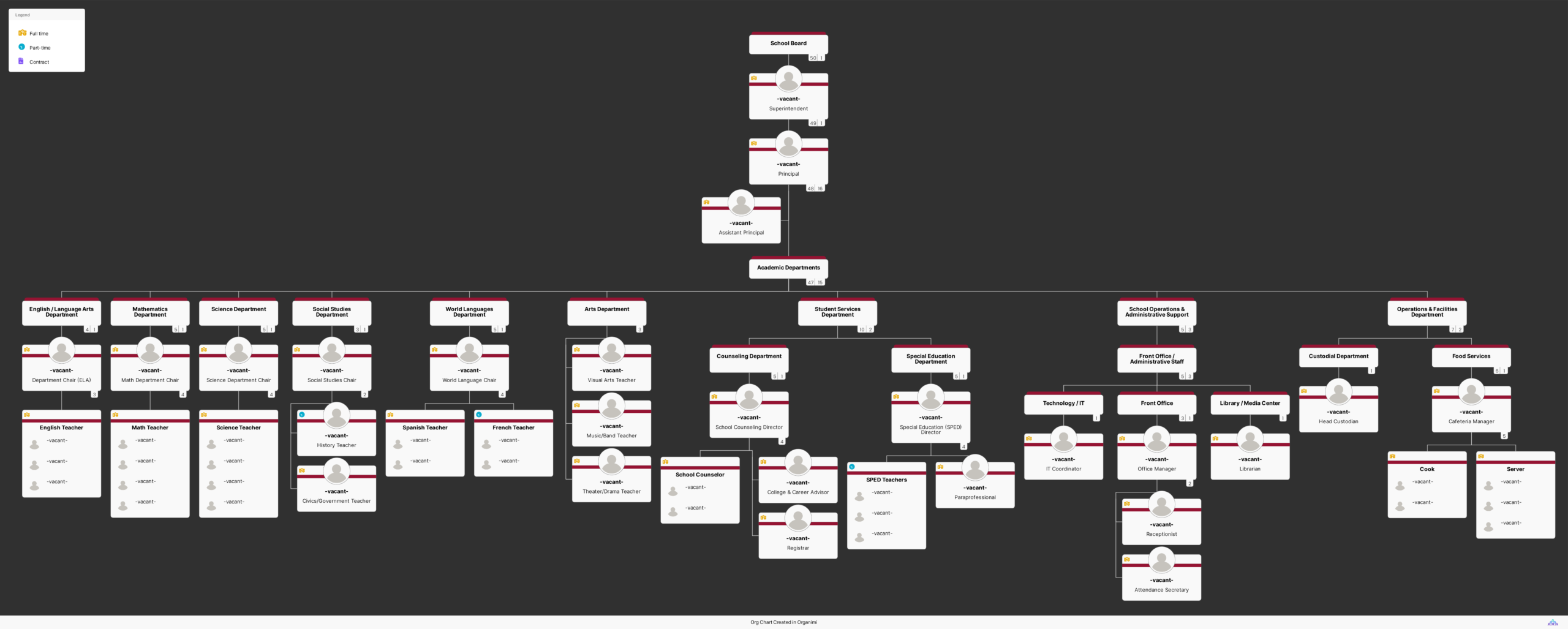
A public school organizational chart is a visual framework that outlines how responsibilities are supervised throughout the school system. It shows the hierarchy of positions, from the school board down to classroom teachers and support staff, along with clear reporting lines that define who reports to whom.
This organizational structure helps the school achieve educational objectives, maintain compliance with state and federal regulations, and deliver quality education to students. It also provides clarity for staff, parents, and community members about how the school operates and who to contact for specific needs.
The Main Components of a Public School Organizational Chart
A public school’s organizational structure includes several key positions, each playing a vital role in the school’s operation and student success.
School Board — The School Board provides governance and oversight for the school district. They set policies, approve budgets, and make strategic decisions that shape the direction of the school system. The Board represents the community’s interests and ensures the school meets educational standards.
Superintendent — The Superintendent serves as the chief executive officer of the school district, overseeing all operations and implementing policies set by the School Board. They manage district-wide initiatives, budgets, and personnel decisions while serving as the primary liaison between the Board and school staff.
Principal — The Principal leads the individual school, managing day-to-day operations, curriculum implementation, and staff development. They create a positive learning environment, handle disciplinary issues, and work closely with teachers to support student achievement.
Assistant Principal — Assistant Principals support the Principal by managing specific areas such as student discipline, scheduling, or curriculum coordination. They often serve as acting Principal when needed and work directly with teachers and students to maintain school operations.
Department Chairs — Department Chairs lead specific academic areas like Math, Science, English, or Social Studies. They coordinate curriculum development, mentor teachers within their department, and ensure instructional standards are met across their subject area.
Teachers — Teachers are responsible for delivering instruction, assessing student progress, and creating engaging learning experiences. They work closely with students, parents, and administrators to support academic growth and social development.
Support Staff — This category includes guidance counselors, librarians, administrative assistants, custodians, and cafeteria workers. Each plays a crucial role in maintaining a safe, organized, and supportive learning environment for students and staff.
The Different Types of Public School Organizational Structures
Public schools adopt different organizational structures based on their size, district policies, and educational goals. Here are the most common structures used:
Hierarchical Structure — This traditional structure features a clear chain of command, with authority flowing from the School Board and Superintendent down through Principals to teachers and staff. It’s commonly used in larger school districts where formal reporting lines help manage complex operations and ensure consistency across multiple schools.
Functional Structure — This structure organizes the school by function or department, such as academics, student services, operations, and administration. Each function is led by a director or coordinator who reports to the Principal or Superintendent. This approach works well for schools that want specialized leadership in distinct operational areas.
Matrix Structure — The matrix structure combines functional and project-based organization, where teachers and staff may report to both a department head and a grade-level or program coordinator. This structure is ideal for schools implementing specialized programs or interdisciplinary initiatives that require collaboration across departments.
Flat Structure — Some smaller schools or alternative education settings use a flat structure with fewer management layers. This approach promotes collaboration and quick decision-making, with teachers having more direct access to school leadership.
Steps on How to Create Your Public School Organizational Chart
Follow this step-by-step guide to create a comprehensive organizational chart for your school:
Identify All Key Positions and Departments — Begin by listing every role essential to your school’s operation. Include leadership positions, teaching staff, administrative support, and specialized roles like counselors, nurses, and special education coordinators. Group similar positions into departments such as academics, student services, operations, and administration.
Define Roles and Responsibilities — For each position, clearly outline the specific responsibilities and expectations. This clarity helps prevent overlap, reduces confusion, and ensures all critical functions are covered. Document who is responsible for curriculum decisions, student discipline, budget management, and parent communication.
Establish Reporting Relationships — Starting from the School Board at the top, map out who reports to whom throughout the organization. Clearly define the lines of authority from the Superintendent through Principals, department heads, and teachers. This creates accountability and establishes clear channels for communication and decision-making.
Choose Your Organizational Structure — Select the structure that best fits your school’s size, culture, and goals. Consider factors like the number of students, available resources, district policies, and your educational mission. The right structure should support efficient operations while promoting collaboration and student success.
Create Your Visual Organizational Chart — Using an organizational chart tool such as Organiim, design a clear visual representation of your school’s structure. Include all positions, reporting lines, and department groupings. Make sure the chart is easy to read and understand at a glance.
Implement and Communicate — Share the completed organizational chart with all staff, parents, and relevant community members. Post it on your website, include it in staff handbooks, and reference it during new employee orientation. Keep the chart updated as positions change or new roles are added.
In Summary
Public schools play a critical role in educating our children and preparing them for successful futures. A well-designed organizational chart is essential for running an efficient school that delivers quality education. It creates transparency, improves communication, and helps everyone understand how they contribute to student success.
Looking to build dynamic and shareable org charts? Explore what Organimi’s org chart software can do and sign up for a free 14-day trial today!