

Outpatient clinics do more than just provide quick checkups. They are critical access points for primary and specialty care that keep our healthcare system running efficiently. For an outpatient clinic to deliver excellent patient experiences and operate smoothly, having a clearly defined organizational structure is essential.
A thoughtful organizational framework helps outpatient clinics stay compliant with healthcare regulations, improve internal communication, and streamline both clinical and administrative workflows.
What Is an Outpatient Clinic’s Organizational Structure?
An outpatient clinic’s organizational structure outlines how roles and responsibilities are divided, coordinated, and supervised within the clinic. It’s typically presented visually using an organizational chart that defines reporting lines and clarifies each staff member’s function.
This structure acts as a roadmap for efficient operations, helping the clinic reach its patient care goals, enhance collaboration among staff, and ensure regulatory compliance.
The Main Components of an Outpatient Clinic Organizational Structure
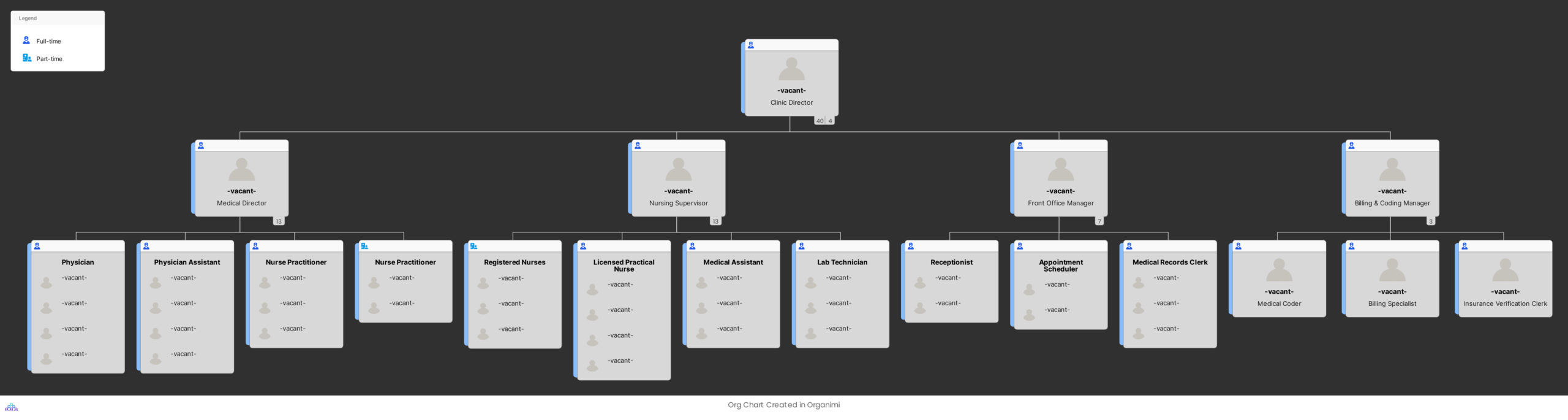
An outpatient clinic’s structure includes both clinical and administrative roles, each playing a vital part in the patient journey. Here’s a look at the key components typically found in a small to medium-sized clinic:
Clinic Director / Administrator — Oversees the entire clinic operation. This role is responsible for managing the clinic’s budget, staffing, compliance, and overall performance. All department heads report to the Clinic Director.
Medical Director — The Medical Director provides clinical oversight and ensures that care delivery meets regulatory standards and internal quality goals. They manage the physicians and advanced practice providers (APPs).
Physicians / Providers — Physicians, Nurse Practitioners (NPs), and Physician Assistants (PAs) provide direct patient care and collaborate on diagnosis, treatment, and follow-ups.
Nursing Supervisor / Clinical Manager — Leads the nursing and clinical support staff. This role manages day-to-day clinical operations, ensuring patients are treated efficiently and safely.
Registered Nurses & Medical Assistants — They support providers by prepping patients, administering medications, and handling vital signs and documentation. Medical Assistants may also assist with lab tests or clerical work.
Front Office Manager — Oversees reception, scheduling, and patient check-in/check-out processes. This person ensures the clinic runs smoothly from the moment a patient walks in.
Billing & Coding Manager — Handles insurance claims, patient billing, and compliance with coding standards. This role ensures the clinic gets paid promptly and accurately.
The Different Types of Outpatient Clinic Organizational Structures
Outpatient clinics can adopt various organizational structures depending on size, services offered, and operational complexity. Here are the most common:
Hierarchical (Traditional) Structure — This is the most common structure, with a clear chain of command from the Clinic Director down to individual staff. It works well for clinics where decisions are made at the top and implemented by department leads.
Functional Structure — This divides the clinic into departments by function, such as clinical care, front office, and billing. Each department is led by a manager who reports to the Clinic Director. It’s ideal for clinics with several specialized teams.
Matrix Structure — In a matrix setup, employees may report to both a functional manager and a service line or project lead. This is more complex but useful in multi-specialty clinics where roles overlap across services.
How to Create an Outpatient Clinic Organizational Structure
Creating a clear and efficient structure helps everyone on your team know where they fit and who they report to. Here’s how to build your clinic’s organizational structure:
Identify Key Roles and Responsibilities — Start by listing the core functions your clinic needs to operate—clinical care, administration, billing, compliance, etc. Then define the roles within each function to avoid overlap and ensure accountability.
Map Out Reporting Relationships — Once roles are defined, establish who reports to whom. This hierarchy improves communication, reduces confusion, and makes accountability clear across departments.
Choose the Right Structure for Your Clinic — Think about your clinic’s size and goals. A small primary care clinic might benefit from a traditional structure, while a growing multi-specialty clinic may need a functional or matrix approach.
Build Your Organizational Chart — Use an organizational chart-making tool like Organimi to create a visual representation of your structure. Include all roles and their reporting lines. This helps new hires, managers, and stakeholders understand the clinic’s workflow at a glance.
Share and Maintain the Chart — Once your chart is complete, share it with staff and leadership. Encourage feedback and keep it updated as team members come and go, or as departments expand.
In Summary
An outpatient clinic’s success relies heavily on smooth coordination between clinical and administrative teams. A clear, well-thought-out organizational structure ensures that staff know their responsibilities, communication flows smoothly, and patients receive quality care from the moment they check in to the moment they leave.
Looking to build dynamic and shareable org charts? Explore what Organimi’s org chart software can do and sign up for a free 14-day trial today!