

Providing compassionate end-of-life care requires more than clinical expertise. It depends on coordination, clarity, and a deeply connected team. Hospice care centers bring together medical professionals, caregivers, and support staff who must work in sync to deliver patient-centered care during some of life’s most sensitive moments.
Without a clear structure, communication gaps and role confusion can impact both care quality and team efficiency. A well-defined hospice organizational structure helps ensure every patient receives consistent, thoughtful support while giving staff the clarity they need to do their best work. An organizational chart makes this structure visible so everyone understands how care is delivered and how their role fits into the bigger picture.
What Is a Hospice Care Organizational Structure?
A hospice care organizational structure is a visual representation of how teams, roles, and leadership are organized within a hospice center. It outlines reporting relationships, areas of responsibility, and how different departments collaborate to support patients and their families.
This structure helps improve communication and streamlines care coordination, making onboarding new staff more effective in a fast-changing care environment.
The Main Components of a Hospice Centre Organizational Structure
While each hospice may vary in size and services, most rely on a core group of roles to deliver high-quality care.
Executive Director or CEO — The Executive Director oversees the entire organization. This role is responsible for strategic direction, operations, compliance, and ensuring the hospice delivers on its mission of compassionate care.
Medical Director — The Medical Director provides clinical oversight. They guide patient care standards, support physicians and nurses, and ensure treatments align with best practices in palliative and end-of-life care.
Director of Nursing — The Director of Nursing manages the nursing team and ensures patients receive consistent, high-quality care. This role oversees care plans, staffing, and day-to-day clinical operations.
Interdisciplinary Team Lead — Hospice care is highly collaborative. The Interdisciplinary Team Lead coordinates social workers, chaplains, bereavement counselors, and volunteers to ensure emotional, spiritual, and psychosocial needs are met alongside medical care.
Admissions and Outreach Director — This role manages patient intake and community relationships. They help families navigate the admissions process and build partnerships with hospitals and care providers.
Finance and Operations Leaders — These roles support the organization behind the scenes, managing billing, compliance, staffing, and resources to keep the hospice running smoothly.
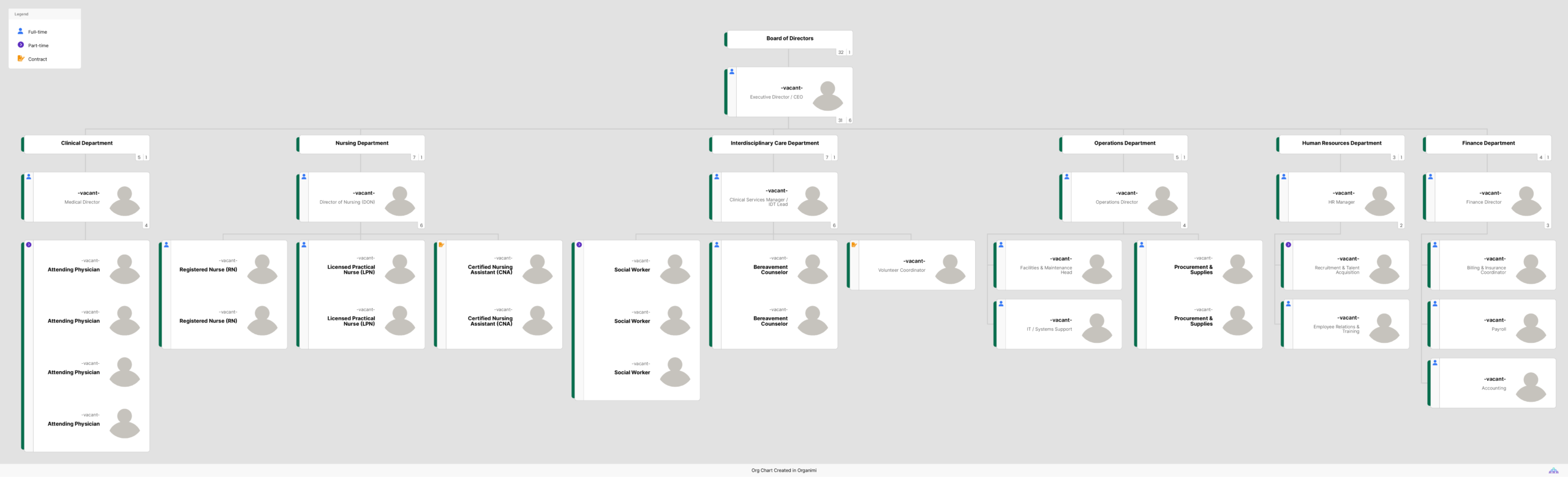
Common Hospice Care Organizational Structures
Hospice organizations often choose a structure based on their size and care model.
Hierarchical Structure — A traditional model with clear reporting lines from leadership to care teams. This works well for larger hospice organizations that require strong oversight and consistency.
Functional Structure — Teams are grouped by specialty such as nursing, social services, and administration. This approach supports expertise and efficient care delivery within each function.
Matrix Structure — A more collaborative model where care teams work closely across disciplines. This is common in hospice settings where coordinated, patient-centered care is essential.
How to Create a Simple Hospice Organizational Chart
Identify Core Care and Support Roles — Start by outlining the key roles involved in delivering care and supporting operations. Focus on clarity so it is easy to understand who is responsible for each part of the patient experience.
Define Responsibilities — Clearly document what each role owns. This includes clinical responsibilities, administrative duties, and decision-making authority. Clear definitions reduce confusion and improve collaboration.
Map Reporting Relationships — Establish who reports to whom across departments. This ensures accountability and helps streamline communication between leadership and care teams.
Choose the Right Organizational Structure — Select a structure that fits your centre’s size, services, and goals. Whether you choose a traditional or functional model, the structure should support both efficiency and quality care.
Build and Maintain the Chart — Use an organizational chart tool like Organimi to create a clear, easy-to-update chart. Keep it current as your team grows and evolves so leadership and staff always have an accurate view of the organization.
In Summary
Hospice care is built on compassion, coordination, and trust. A clear organizational structure helps teams work together more effectively, supports better patient outcomes, and ensures no detail is overlooked.
With a simple and well-maintained org chart, hospice care centers can provide more consistent care, improve communication, and confidently support both patients and their families.
Looking to build dynamic and shareable org charts? Explore what Organimi’s org chart software can do and sign up for a free 14-day trial today!