
A successful hockey team is a complex operation that requires seamless coordination and clear lines of responsibility. To truly excel, a hockey organization needs to operate with precision, fostering a winning culture and maximizing player potential. A critical component to achieving this efficiency is a clearly defined organizational structure.
Beyond streamlining day-to-day operations, a clear structure ensures effective communication among all levels, optimizes player development, and enhances the overall strategic execution of the team.
What is a Hockey Team’s Organizational Structure?
A hockey team’s organizational structure serves as the blueprint for how tasks are coordinated within the team and its supporting staff. It is also a visual representation of the organization’s hierarchy, which clearly outlines all roles and reporting lines. This clarity ensures everyone understands their specific responsibilities, contributing to the organization’s ability to achieve its objectives while creating an exciting experience for fans.
Key Players in a Hockey Team’s Organizational Structure
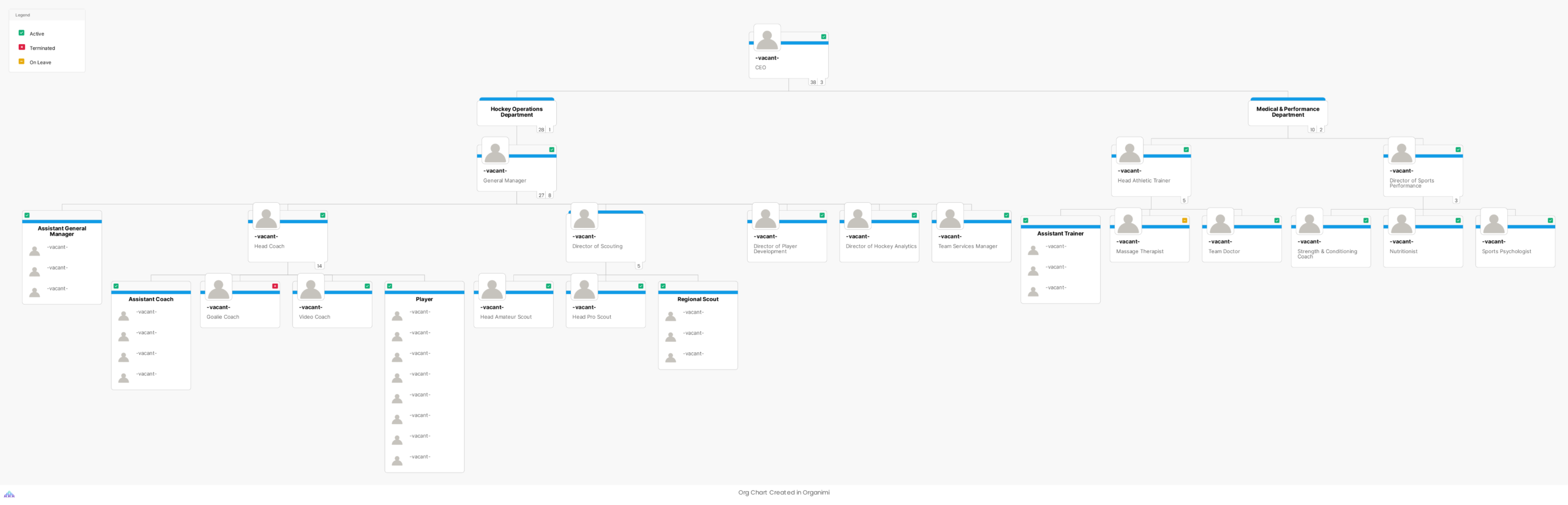
A well-designed hockey organizational structure divides responsibilities among several key roles, each playing a vital part in the team’s success.
Owner/General Manager — The Owner or General Manager provides the overall vision and strategic direction for the hockey team. They lead the entire organization and are responsible for high-level decisions that shape the team.
Head Coach — The Head Coach is in charge of the day-to-day on-ice operations, including player strategy, line combinations, and overall team performance. They manage the coaching staff and report directly to the Owner/General Manager.
Assistant Coaches — Assistant Coaches provide direct support to the Head Coach, focusing on specific aspects of the game. They work closely with players to ensure skill development and strategic execution.
Players — The players are the core of the team, responsible for executing strategies on the ice and performing at their best. They work closely with the coaching staff to meet competitive standards.
Scouts — Scouts are crucial for identifying and evaluating new talent, both for drafting and potential trades. They help maintain a strong player pipeline and support the team’s long-term competitive goals.
Medical/Training Staff — This team includes athletic trainers, physical therapists, and doctors who are responsible for player health, injury prevention, and rehabilitation. They ensure players are in optimal physical condition.
Common Hockey Team Organizational Structure Models
Hockey organizations adopt various structures to best suit their operational style and competitive goals. Here are some commonly used organizational structures in hockey:
Traditional Structure — This structure features a clear chain of command, with strategic decisions flowing from the Owner/General Manager down to the coaching staff and then to the players. It is often used by established professional teams where strict control and formal reporting lines simplify complex operations across many departments.
Functional Structure — This model divides the organization into departments based on specialized roles, such as player development, scouting, medical, and business operations. Each department is typically led by a director or manager who reports to the Owner/General Manager. This is ideal for organizations needing specialized teams to focus on distinct areas of operation.
Player-Central Structure — While still having a hierarchy, this structure emphasizes direct support and communication channels that prioritize player needs and development. It might feature more direct reporting lines between players and specialized support staff to foster a highly supportive environment.
Steps to Creating Your Hockey Team’s Organizational Structure
Follow this step-by-step guide to create a well-defined organizational structure for your hockey team:
Identify Core Roles and Functions — Begin by pinpointing the essential roles and functions required for your hockey team to operate smoothly. This typically includes on-ice coaching, player management, scouting, medical support, and business operations. Next, clearly define the responsibilities for each key role within these functions. This ensures all critical aspects of your organization are efficiently managed to meet your competitive and business goals.
Define Reporting Relationships — Starting from the top, determine who holds decision-making authority. Outline the reporting lines from the Owner/General Manager down through the Head Coach, assistant coaches, and other key department heads. This helps reduce confusion, promotes accountability, and fosters a more efficient collaboration.
Select the Ideal Organizational Structure — our chosen structure will serve as the foundation for how your hockey organization achieves its operational objectives. Consider your team’s size, competitive level, and long-term goals to select the most suitable organizational structure.
Visualize with an Organizational Chart — Using a dedicated org chart-making tool such as Organimi, create a detailed organizational chart that visually represents your hockey team’s structure. Ensure all roles and their reporting relationships are included to help everyone understand their place within the organization.
Implement and Communicate — With your org chart finalized, it’s time to share it. Encourage questions and feedback to ensure the org chart remains clear and cohesive. Regularly update your chart to reflect any operational changes or shifts within your hockey organization.
In Summary
Hockey is a dynamic sport, and a well-planned organizational structure is important for any hockey team, ensuring efficient operations, effective strategy execution, and competitive success.
Looking to build dynamic and shareable org charts? Explore what Organimi’s org chart software can do and sign up for a free 14-day trial today!