
A fair might look like all fun and excitement from the outside. But behind the scenes, it is a complex operation. Every successful fair runs on the efforts of an organized team that knows its roles and keeps everything running smoothly from start to finish.
To keep things running smoothly, every fair should have a clearly defined organizational structure. A structured approach improves communication, streamlines planning, and ensures that everyone, from the fair director to temporary event staff, works toward a shared goal of creating a great experience for attendees.
What is a Fair Organizational Structure?
A fair organizational structure outlines how tasks, responsibilities, and decision-making are distributed among the team that runs a fair or event. It’s also a visual representation of hierarchy that shows who reports to whom, which departments exist, and how all areas connect to keep the fair running efficiently.
Having a clear structure helps with planning, staffing, logistics, and compliance. It gives leadership better visibility into operations and helps every team member understand their responsibilities. No matter how long your fair lasts, an organized structure ensures that everything from safety to sponsorships runs smoothly without confusion.
The Main Components of a Fair Organizational Structure
A fair’s success depends on several key roles working together. Here’s a breakdown of the main components found in most fair organizational structures:
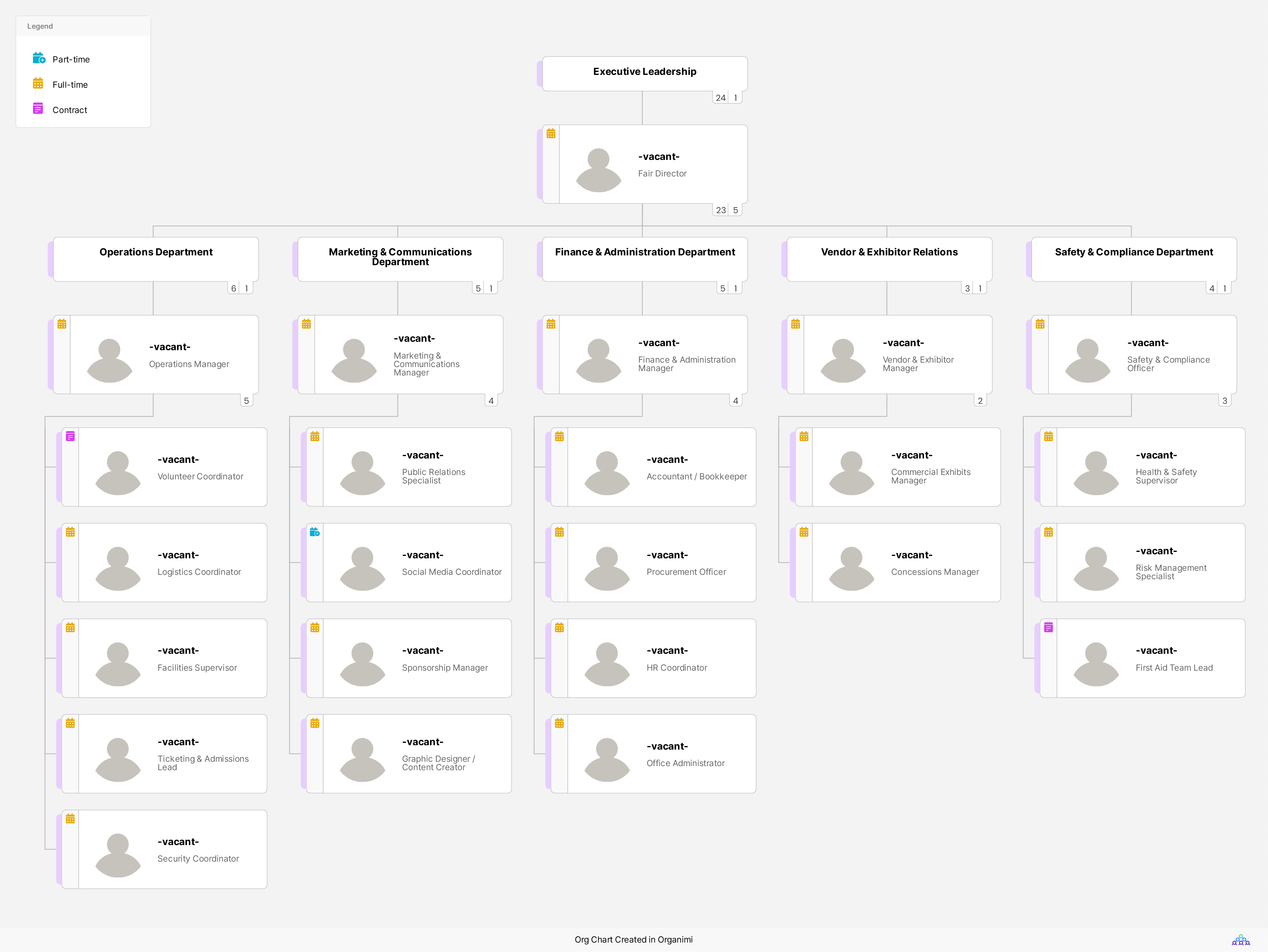
Fair Director — The Fair Director oversees all aspects of the event. They set the vision, manage budgets, and coordinate with stakeholders, vendors, and sponsors.
Operations Manager — Reporting to the Fair Director, the Operations Manager oversees the day-to-day logistics, including setup and teardown, as well as managing permits, safety procedures, and vendor coordination.
Vendor & Exhibitor Manager — This role focuses on recruiting and managing food vendors, exhibitors, and merchants. They handle applications, contracts, and booth assignments to make sure all vendors follow fair guidelines and maintain quality standards.
Marketing & Communications Manager — Responsible for promoting the fair, the Marketing Manager oversees advertising, social media, public relations, and partnerships. They ensure that attendance targets are met and that the fair maintains a positive public image.
Volunteer Coordinator— The coordinator manages all volunteer and temporary staff scheduling, ensuring the right people are in the right places throughout the event. They also handle onboarding and orientation.
Safety & Compliance Officer — Tasked with overseeing public safety, this person works with local authorities to enforce compliance with regulations. They manage emergency response planning, inspections, and incident reporting.
The Different Types of Fair Organizational Structures
Fairs can vary in size and complexity, so there’s no one-size-fits-all approach. However, here are some common types of organizational structures fairs use:
Traditional (Hierarchical) Structure — This structure features a clear chain of command where decisions flow from the Fair Director down to department heads and staff. It’s ideal for large, established fairs that require strict oversight and formal reporting lines.
Functional Structure — In this model, departments are divided by key functions or departments. Each function is managed by a department lead who reports to the Fair Director. This structure promotes specialization and efficiency.
Committee-Based Structure — Smaller fairs often use a committee system, where teams of volunteers or board members oversee different areas like food, entertainment, and logistics. It fosters collaboration and community involvement while keeping leadership distributed.
Steps to Create Your Fair Planning Organizational Chart
Follow these steps to create a clear and effective organizational structure for your fair:
Identify Core Departments and Roles — Start by listing all the major areas needed to run your fair successfully, such as operations, marketing, vendors, safety, and finance. Within each department, outline the key roles and responsibilities to ensure all aspects are covered.
Define Reporting Relationships — Establish who reports to whom. For example, department leads should report to the Fair Director, while coordinators and assistants report to their department managers. A clear reporting line reduces confusion and improves accountability.
Choose the Right Structure for Your Fair — Select an organizational model that fits your fair’s size and complexity. Larger events may benefit from a hierarchical structure, while smaller community fairs may operate better with a committee-based approach.
Create Your Organizational Chart — Use a tool like Organimi to build your fair’s org chart. Include all key roles, departments, and reporting relationships. Organimi makes it simple to design, customize, and share charts that bring transparency to your fair’s structure.
Share and Update Regularly — Once your org chart is ready, share it with your fair staff, volunteers, and partners. Encourage feedback and keep it updated as roles or responsibilities change, leading up to and during the event.
In Summary
A fair is a complex operation that relies on coordination, communication, and structure. A well-designed organizational structure helps every team member understand their role, ensures smoother operations, and ultimately delivers a better experience for the community and attendees.
Looking to build dynamic and shareable org charts? Explore what Organimi’s org chart software can do and sign up for a free 14-day trial today!