
Esports has evolved into becoming a global phenomenon, captivating millions while generating significant revenue. Top esports organizations such as 100 Thieves, Sentinels, and T1 require more than raw talent to thrive. To truly succeed in this industry, an esports organization needs to deliver its best performance and foster a thriving competitive environment. A big component of achieving this is a clearly defined organizational structure, which ensures smooth team communication, optimizes player performance, and enhances the overall strategic execution.
What Exactly is an Esports Organizational Structure?
An esports organizational structure serves as the blueprint for coordinating responsibilities within an esports team or company. It’s also a visual representation of the organization’s hierarchy, clearly outlining all roles and reports. This clarity ensures everyone understands their specific responsibilities, contributing to the organization’s ability to achieve its objectives.
Key Players in an Esports Organizational Structure
A well-designed esports organizational structure divides responsibilities among several key roles, each playing a vital part in the organization’s success.
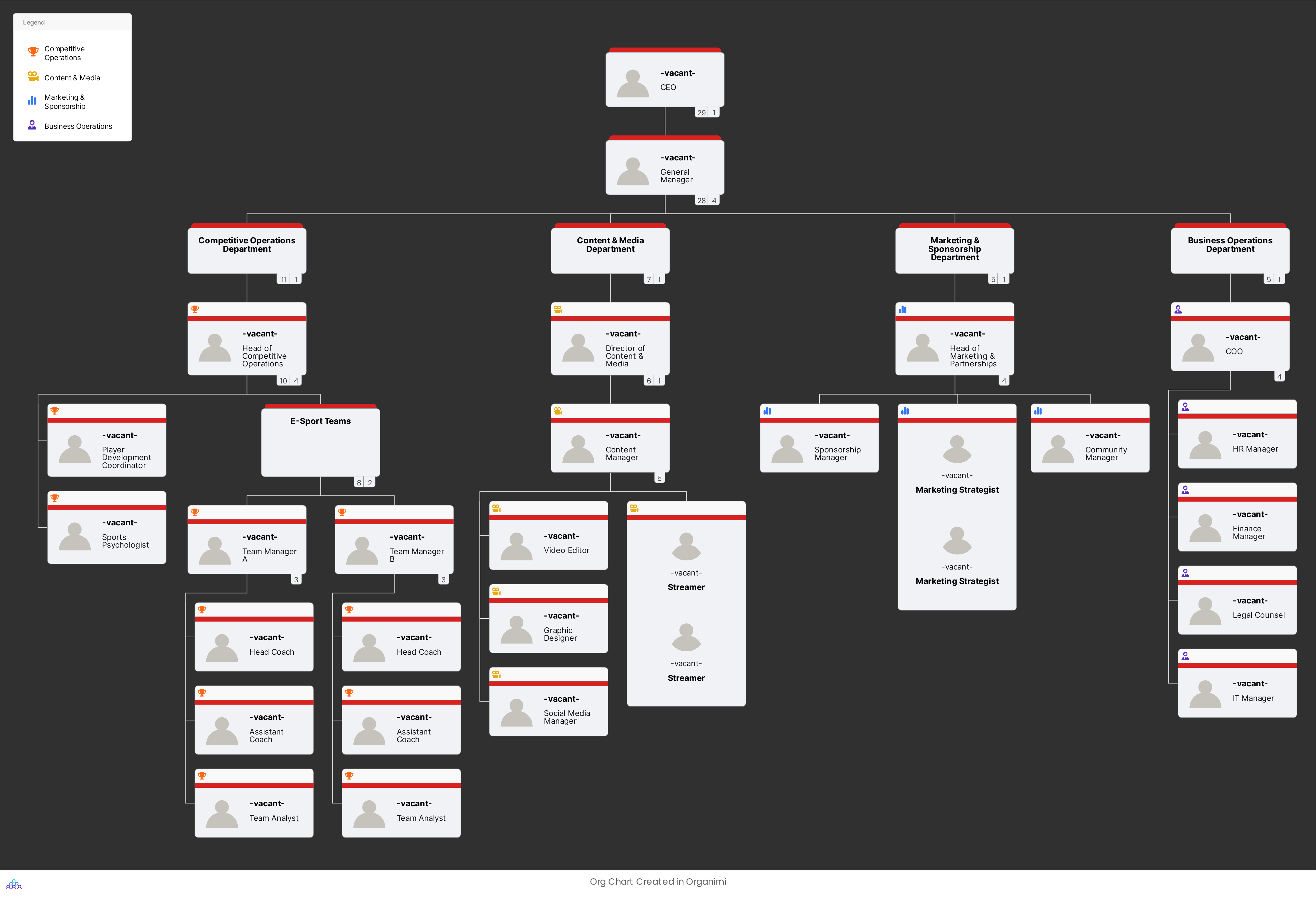
CEO/Owner — The CEO or Owner provides the overall vision and strategic direction for the organization. They lead the entire team and are responsible for high-level decision-making that shapes the organization’s brand and future.
General Manager — The General Manager handles the everyday operations, including team management, scheduling, and ensuring player well-being and satisfaction. They typically directly report to the CEO/Owner.
Coaches — Working closely with players, coaches are responsible for guiding player development, strategizing for matches, and optimizing team performance to ensure competitive readiness.
Team Managers — Team Managers provide direct support to the players and coaches, where they handle logistics, travel arrangements, and ensure all team needs are met. They assist coaches and players in maintaining efficient operations.
Content Creators/Social Media Managers — These roles are crucial for building the organization’s brand and engaging with fans. They manage social media platforms, create compelling content, and foster community interaction.
Common Esports Organizational Structure Models
Esports organizations adopt various structures to best suit their competitive goals and operational style. Here are some commonly used organizational structures:
Hierarchical Structure — This structure is often used by larger, more established organizations where strict control and formal reporting lines simplify operations. With a clear chain of command, strategic decision-making flows down from top leadership to teams and individual players.
Functional Structure — This model divides the organization into separate departments based on specialized roles, such as player management, content creation, and marketing. Ideal for organizations needing specialized teams to focus on distinct areas of operation, each department is typically led by a manager who reports to the General Manager
Divisional Structure — The divisional structure organizes the esports organization into divisions based on different game titles, regional teams, or competitive circuits. It can be effective for large esports organizations with diverse competitive interests, allowing for tailored strategies for different games or markets.
Steps to Creating Your Esports Organizational Structure
To create your own organizational structure for your esports organization, follow these steps:
Identify Core Roles and Functions — Begin by pinpointing the essential roles and functions required for your organization to operate smoothly. This typically includes player development, team management, content creation, marketing, and business development. Next, define the responsibilities for each key role within these functions. This ensures all critical aspects of your organization are efficiently managed to meet your business goals.
Define Reporting Relationships — Starting from the top, determine who holds decision-making authority. Outline the reporting lines from the CEO/Owner down through the General Manager, coaches, and team managers. This clarity helps reduce confusion, promotes accountability, and fosters more efficient collaboration among teams and departments.
Select the Ideal Organizational Structure — Your chosen structure will serve as the foundation for how your esports organization achieves its operational objectives. Consider your organization’s size, competitive focus, and long-term goals to select the most suitable structure.
Visualize with an Organizational Chart — Using a dedicated org chart-making tool like Organimi, create a detailed chart that visually represents your esports structure. Ensure all roles and their reporting relationships are clear to help everyone understand their place within the organization.
Implement and Communicate — With your org chart finalized, it’s time to share it. Encourage questions and feedback to ensure the org chart remains clear and cohesive, and don’t forget to update your chart to reflect any operational changes or shifts within your esports organization.
In Summary
Esports is a thrilling and rapidly expanding industry, and a well-planned organizational structure is invaluable. It helps ensure efficient operations, effective strategy execution, and ultimately, competitive success.
Looking to build dynamic and shareable org charts? Explore what Organimi’s org chart software can do and sign up for a free 14-day trial today!