

As a bustling hub of activity, an airline is a complex ecosystem where thousands of people work together to ensure smooth experiences for millions of passengers. The key to this coordinated effort is a clearly defined organizational structure. Beyond just streamlining day-to-day tasks, a strong structure helps improve communication, enhance security protocols, and ensure that the airline remains compliant with its strict aviation regulations.
What is an Airline’s Organizational Structure?
An airline organizational structure is the framework that outlines how all the different parts of the airline are organized and managed. Think of it as a blueprint that shows who reports to whom, what each team is responsible for, and how different departments interact. This visual representation is crucial for ensuring everyone understands their role, which contributes to the airline’s overall goals. A well-designed structure helps the airline meet its business objectives while also providing exceptional service to travelers.
The Main Components of an Airline Organizational Structure
An airline’s organizational chart is a detailed map of key roles and departments, each with a specific function. Here are some of the main players you’ll find in a typical airline structure:
Airline Director/CEO — This is the top-level executive who oversees all airline operations, sets strategic goals, and is responsible for the overall direction and performance of the airline.
Operations Manager — The Operations Manager handles the daily logistics of the airlinet. This includes managing airfield operations, ground services, and ensuring all parts of the airline run on schedule. They often report directly to the Airport Director.
Customer Experience Manager — This position focuses on the passenger journey. They are responsible for managing guest services, information desks, and ensuring the overall traveler experience is positive, from check-in to boarding.
Chief Financial Director — The Finance Director is in charge of all financial planning, budgeting, and accounting for the airline. They manage the airline’s revenue streams, expenditures, and capital projects to ensure financial stability and sustainability.
Human Resources Director — This role manages all aspects of staffing and employee relations. Their responsibilities include recruitment, training, payroll, and benefits administration, as well as fostering a positive and productive work environment for all airline employees.
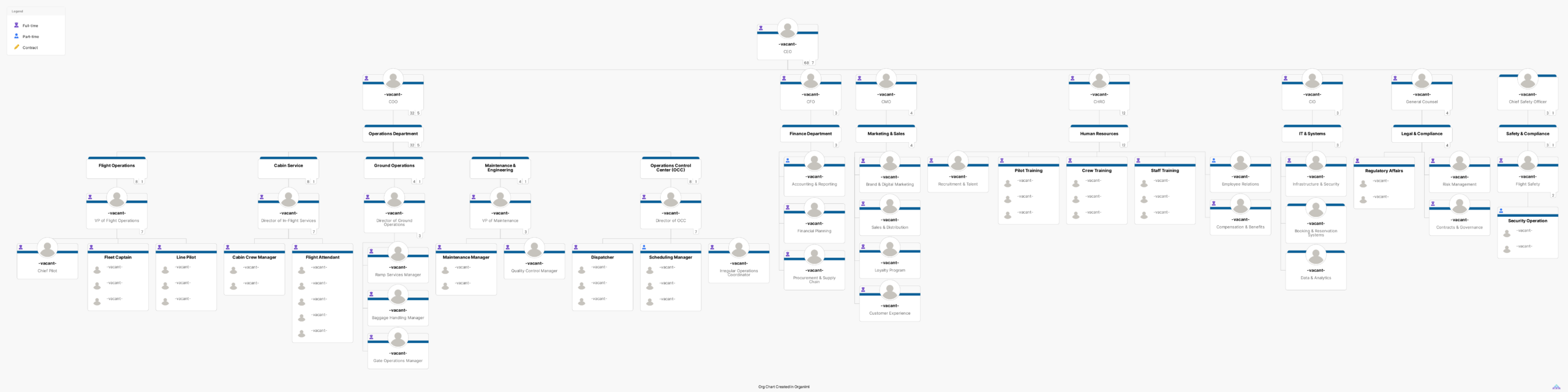
Different Types of Airline Organizational Structures
Like any large organization, airlines can adopt different structures to best suit their size and operations.
Traditional Structure — This is the classic hierarchical model where decision-making authority flows from the Airline Director down through a clear chain of command to all departments. This structure is common in larger, more established airlines where clear reporting lines are essential for managing complex, large-scale operations.
Functional Structure — In a functional structure, the airline is divided into departments based on their specific function, such as Operations, Finance, Security, and Human Resources. Each department has its own manager who reports up the chain. This structure is ideal for medium-sized airlines that need specialized teams to focus on distinct areas of operation.
Divisional Structure — A divisional structure might organize an airline into divisions based on terminals, types of services, or even different locations if a single authority manages multiple airlines. Each division operates with a degree of autonomy, allowing for more tailored strategies to serve specific needs.
Steps to Create Your Airline Organizational Structure
Ready to build a more efficient airline? Here’s a simple guide to creating your own organizational structure.
Map Out Key Roles and Departments — Start by identifying all the essential functions your airlinet needs to operate, for example, ground services and security, to finance and customer support. Next, list all the key roles within each of these departments, making sure to define their responsibilities. This ensures no critical task is left unmanaged.
Define Reporting Relationships — Decide who has the authority to make decisions. This helps prevent confusion, promotes accountability, and ensures teams can collaborate efficiently to meet shared goals.
Choose the Right Structure for Your Airline — Your organizational structure will be the backbone of your operations, so considering your airline’s size, operational needs, and strategic goals will be crucial.
Visualize Your Org Chart — Using an org chart tool like Organimi, create a professional organizational chart that clearly represents your airline’s structure. Make sure to include all roles, departments, and reporting relationships so everyone can see where they fit within the organization.
Share and Implement — Once your chart is finalized, share it with your entire team. Encourage questions and feedback to ensure everyone understands the new structure. Remember to regularly update your chart to reflect any changes in staff or operations to keep it accurate.
In Summary
Running a place as complex as an airlinet is no small task. But a well-designed organizational structure is what makes it all possible. With a clear organization, it’s the blueprint for efficient operations, clear communication, and ultimately, a great experience for every passenger who walks through the door.
Looking to build dynamic and shareable org charts? Explore what Organimi’s org chart software can do and sign up for a free 14-day trial today!