

Delivering quality vocational education takes more than skilled instructors. It requires a well-coordinated team, clear leadership, and an organizational structure that supports both students and staff at every level.
Trade schools bring together educators, administrators, student services staff, and industry partners who all need to work in sync to deliver practical, career-focused programs. When the structure is unclear, communication breaks down which can impact students.
A well-defined trade school organizational structure gives everyone a clear picture of how the institution operates, who is responsible for what, and how decisions get made. An organizational chart makes that structure visible and accessible to the whole team.
What Is a Trade School Organizational Structure?
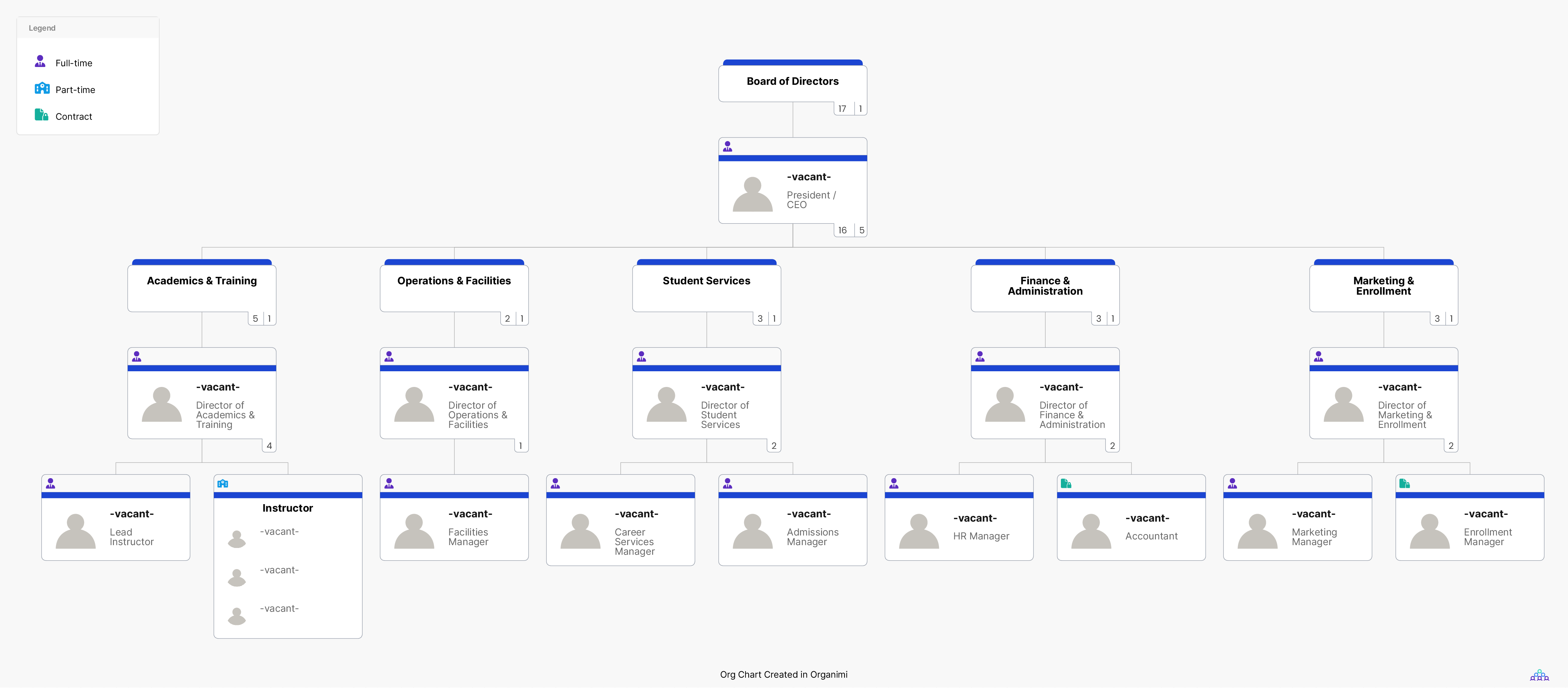
A trade school organizational structure is a visual representation of how leadership, departments, and staff roles are arranged within a vocational institution. It defines reporting relationships, outlines areas of responsibility, and shows how different teams work together to support student success and program delivery.
A clear structure helps improve internal communication, supports consistent operations, and makes onboarding new staff significantly easier. This is especially helpful in an environment where programs and enrollment can shift quickly.
The Main Components of a Trade School Organizational Structure
While every trade school is different in size and focus, most rely on a core set of roles to keep programs running and students supported.
Executive Director or President — The Executive Director or President leads the entire institution. This role sets the strategic direction, oversees operations, manages relationships with accrediting bodies, and ensures the school is fulfilling its mission to prepare students for the workforce.
Academic Dean or Director of Education — The Academic Dean oversees all instructional programs. They are responsible for curriculum development, program quality, instructor performance, and ensuring courses meet industry and accreditation standards.
Department Heads — Each trade program, whether it is HVAC, electrical, cosmetology, automotive, or healthcare, typically has a dedicated coordinator. This person manages instructors, monitors student progress, maintains equipment, and keeps the program aligned with current industry standards.
Director of Student Services — This role supports students from enrollment through graduation. Responsibilities include advising, financial aid guidance, accessibility support, and connecting students with job placement resources.
Admissions Director — The Admissions Director manages recruitment, inquiry response, campus tours, and the enrollment process. They also build relationships with high schools, workforce agencies, and community organizations to bring in prospective students.
Common Trade School Organizational Structures
Trade schools typically adopt one of a few common structures depending on their size and how programs are delivered.
Hierarchical Structure — A traditional top-down model with clear reporting lines from executive leadership down through department heads and instructors. This works well for larger institutions that need consistent oversight and standardized operations across multiple programs.
Functional Structure — Staff are grouped by function, such as academic affairs, student services, and administration. This approach supports specialization and works well when departments have distinct responsibilities that do not heavily overlap.
Program-Based Structure — Teams are organized around individual trade programs rather than functions. Each program operates somewhat independently with its own coordinator and instructors. This model is common in schools that offer a wide range of unrelated trades under one roof.
How to Create a Simple Trade School Organizational Chart
Identify Core Roles and Departments — Start by listing the key roles involved in program delivery, student support, and administration. Focus on clarity so the chart is easy to read and understand at a glance.
Define Responsibilities — Document what each role owns, including instructional duties, administrative tasks, and decision-making authority. Clear definitions reduce overlap and make it easier for new staff to understand where they fit.
Map Reporting Relationships — Establish who reports to whom across the institution. This creates accountability and helps staff know who to go to when decisions need to be made or issues need to be escalated.
Build and Maintain the Chart — Use an organizational chart tool like Organimi to create a chart that is easy to update as your school grows. Organimi makes it simple to add new roles, adjust reporting lines, and share an accurate view of the organization with your whole team.
In Summary
Trade schools thrive when their teams are well-organized, communication is clear, and everyone understands their role in supporting student success. A strong organizational structure makes all of that possible.
With a simple, well-maintained org chart, trade schools can improve coordination across departments, support better student outcomes, and build a foundation that scales as enrollment and programs grow.
Looking to build dynamic and shareable org charts? Explore what Organimi’s org chart software can do and sign up for a free 14-day trial today!