

More than just a place to handle legal matters, a law firm is a critical part of the justice system. For a law firm to be considered successful, it needs to operate efficiently and be able to provide excellent client service and legal representation. An important ingredient to an efficient law firm is having a clearly defined organizational structure.
Aside from streamlining operations, a clear structure in place helps keep the firm compliant with bar regulations, improves team communication, and enhances the overall quality of legal services delivered to clients.
What Is a Law Firm’s Organizational Structure?
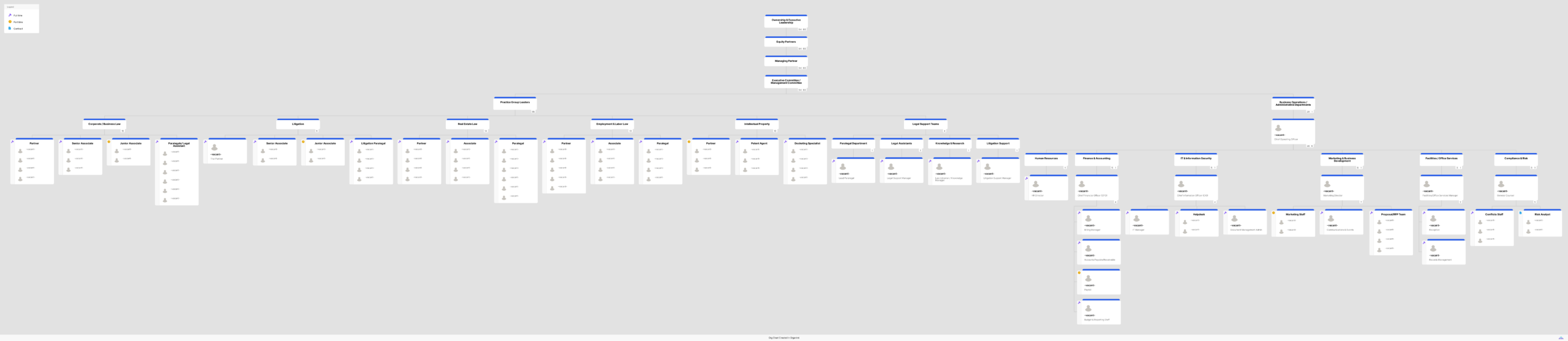
A law firm organizational chart is a visual framework that outlines how responsibilities are distributed, coordinated, and supervised throughout the firm. It displays the hierarchy of positions, from managing partners down to associate attorneys and support staff, along with clear reporting lines that define authority and communication channels.
This organizational structure helps the firm achieve its business objectives, maintain ethical compliance with bar regulations, and deliver high-quality legal services to clients.
The Main Components of a Law Firm Organizational Chart
A law firm’s organizational structure includes several key positions, each playing a critical role in the firm’s success and client satisfaction.
Managing Partner — The Managing Partner oversees all operations and strategic direction. They make high-level decisions about firm growth, partner compensation, major client relationships, and overall business strategy while ensuring the firm remains profitable and maintains professional standards.
Executive Committee — The Executive Committee consists of senior partners who collaborate with the Managing Partner on major firm decisions, including hiring equity partners, approving budgets, and setting firm policies.
Practice Group Leaders — Practice Group Leaders head specific legal departments such as Corporate Law, Litigation, Real Estate, or Intellectual Property. They manage attorneys within their practice area, oversee case quality, and ensure their team meets client expectations.
Partner — Partners are senior attorneys with ownership stakes in the firm. They handle complex legal matters, manage major client relationships, supervise associate attorneys, and contribute to firm management and business development.
Associate Attorney — Associates are licensed attorneys who handle legal research, draft documents, represent clients, and support partners on cases. They work toward developing their skills and building a client base with the goal of eventually becoming partners.
Paralegal — Paralegals provide essential legal support by conducting research, preparing documents, organizing case files, and communicating with clients. They work closely with attorneys to ensure cases progress efficiently.
The Different Types of Law Firm Organizational Structures
Law firms adopt different organizational structures based on their size, practice areas, and business goals. Here are the most common structures:
Traditional Partnership Structure — This structure features a clear hierarchy with equity partners at the top, followed by non-equity partners, associates, and support staff. Decision-making authority rests primarily with senior partners. Common in established law firms where experience and seniority determine leadership roles.
Practice Group Structure — This structure organizes the firm by legal specialties such as Corporate, Litigation, Family Law, or Tax. Each practice group operates with its own leader and team of attorneys. Works well for mid-sized to large firms with diverse practice areas requiring specialized expertise.
Office-Based Structure — For firms with multiple locations, an office-based structure assigns leadership to each office. Each office has its own managing partner who oversees local operations while coordinating with firm-wide leadership. Suits regional or national firms needing local autonomy.
Matrix Structure — The matrix structure combines practice group organization with office-based management, where attorneys may report to both a practice group leader and an office managing partner. Ideal for large, multi-office firms with multiple practice areas.
Steps on How to Create Your Law Firm Organizational Chart
Follow this step-by-step guide to create a comprehensive organizational chart for your law firm:
Identify All Key Positions and Practice Areas — List every role essential to your firm’s operation, including all attorney positions from partners to associates, plus support roles like paralegals and administrative staff. Identify your practice areas to understand how work is divided across the firm.
Define Roles and Responsibilities — For each position, clearly outline specific responsibilities and authority levels. Document who handles client intake, case supervision, and business development to prevent confusion about decision-making authority.
Establish Reporting Relationships — Starting from the Managing Partner at the top, map out reporting lines throughout the organization. Define who supervises associates, who paralegals report to, and how practice group leaders coordinate with firm management.
Choose Your Organizational Structure — Select the structure that best aligns with your firm’s size, practice areas, and strategic goals. Consider the number of attorneys, geographic footprint, areas of specialization, and growth plans.
Create Your Visual Organizational Chart — Using an organizational chart tool like Organimi, design a clear visual representation of your firm’s structure. Include all positions, reporting lines, and practice group divisions.
Implement and Communicate — Share the completed organizational chart with all attorneys and staff. Include it in new employee orientation materials and update it regularly as the firm grows or reorganizes.
In Summary
A well-designed organizational chart helps law firms deliver excellent legal services while maintaining efficient operations and clear career paths for attorneys. It creates structure, improves coordination, and helps everyone understand how they contribute to the firm’s success.
Looking to build dynamic and shareable org charts? Explore what Organimi’s org chart software can do and sign up for a free 14-day trial today!