

Travelling is the heart of unforgettable adventures. Behind every seamless travel experience is a well-organized team working together to plan itineraries, coordinate logistics, and provide exceptional customer service.
To keep all these moving parts running smoothly, a clearly defined organizational structure is essential. Having a proper structure not only improves workflow and communication but also helps travel agencies deliver consistent, high-quality service to every traveler.
What Is a Travel Agency Organizational Structure?
A travel agency’s organizational structure is the framework that outlines how responsibilities, tasks, and authority are distributed within the agency.
It visually represents the hierarchy and ensures that every department and employee knows their role in supporting the agency’s goals.
The Main Components of a Travel Agency Organizational Structure
A travel agency’s organizational structure typically includes several key departments, each playing a critical role in daily operations and customer satisfaction.
Here’s a breakdown of the most common roles and reporting relationships in a modern travel agency:
CEO / Managing Director — The CEO or Managing Director oversees all operations and sets the agency’s strategic direction. They manage key partnerships, oversee budgets, and ensure that all teams work toward common business goals.
Operations Manager— The Operations Manager handles the agency’s core services, including tour planning, reservations, and vendor management. They ensure everything runs efficiently from booking to travel execution.
Tour Operations Supervisor — This role manages travel packages, itineraries, and supplier coordination. They supervise Travel Consultants and Tour Coordinators who assist clients with trip planning.
Ticketing & Reservations Supervisor — Responsible for airline, hotel, and transportation bookings, ensuring all reservations are accurate and cost-effective.
Customer Service Supervisor — Leads the customer support team, resolving inquiries, complaints, and post-travel feedback to maintain client satisfaction.
Sales & Marketing Manager — Focused on growing the agency’s customer base through strategic marketing, partnerships, and brand management. They oversee Corporate and Retail Sales Executives, as well as Digital Marketing Specialists.
Finance & Administration Manager — Manages the agency’s financial health, handling budgets, payroll, and reporting to ensure profitability and compliance.
IT & Digital Services Manager — Oversees the agency’s technology, including booking systems, websites, and cybersecurity.
HR Manager— Handles hiring, employee development, and workplace culture to ensure the agency has a motivated and skilled team.
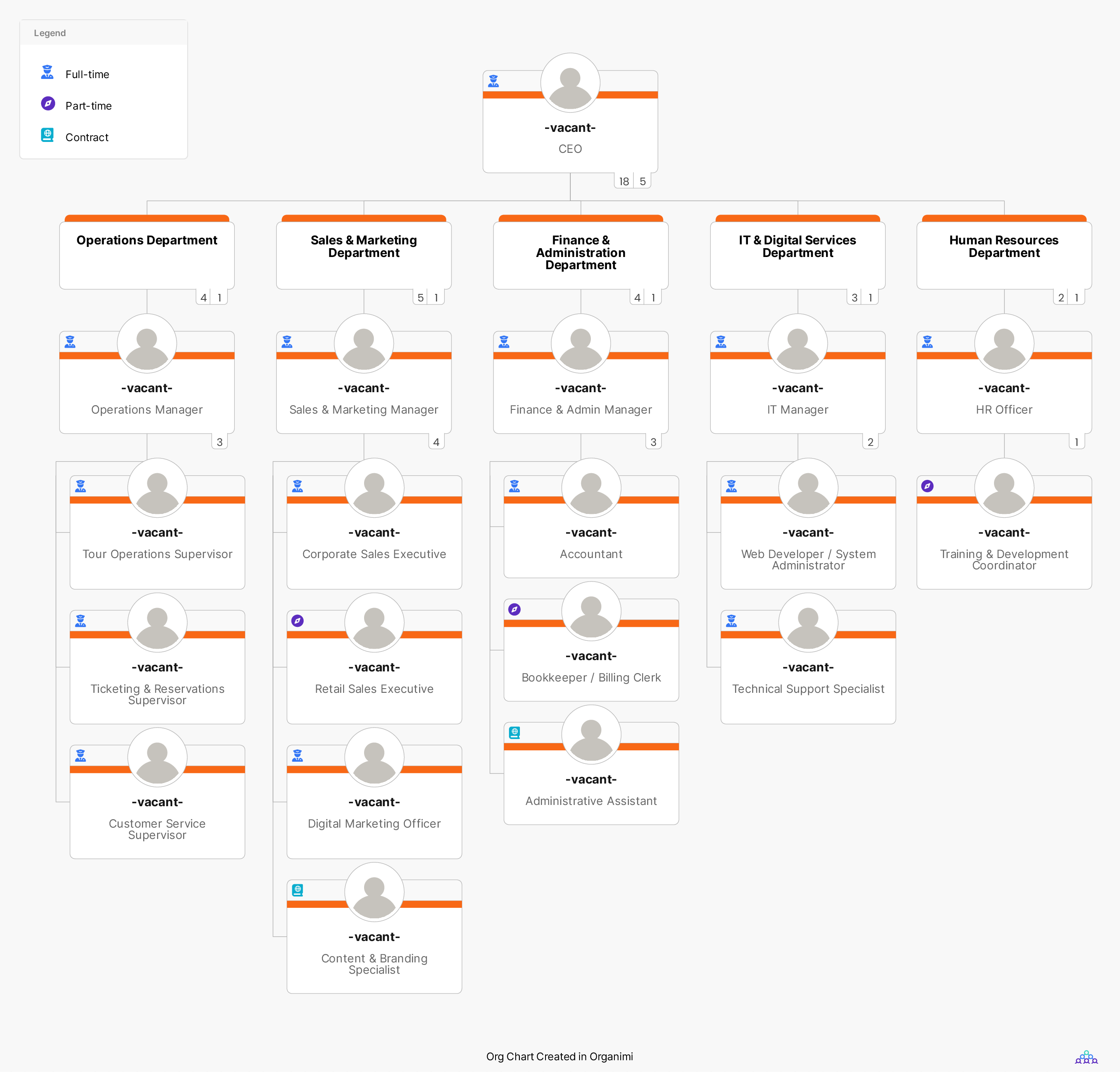
The Different Types of Travel Agency Organizational Structures
Not all travel agencies are built the same, and neither are their structures. The right structure depends on the size of your agency, the markets you serve, and your business goals. Here are the most common types of travel agency organizational structures:
Traditional Hierarchical Structure — This structure follows a clear chain of command, where decisions flow from top management down to department heads and staff. This structure is most suited for large travel agencies that handle high volumes of clients and bookings.
Functional Structure — Departments are divided based on specialized functions, such as operations, marketing, finance, and customer service. Each department is led by a manager who reports to the CEO. This structure promotes efficiency and allows experts to focus on their specific areas.
Divisional Structure — Ideal for large or multi-branch agencies, this setup organizes teams by service type (e.g., leisure, corporate, luxury) or by geographic region. Each division has autonomy to tailor its services to the market it serves, while still aligning with the agency’s overall goals.
Steps on How to Create Your Travel Agency Organizational Chart
Ready to design your own travel agency organizational chart? Here’s a simple step-by-step guide:
Identify Key Roles and Departments — Start by listing the essential functions of your travel agency, such as operations, sales, marketing, customer service, finance, and HR. Then, define the key roles within each department.
Define Reporting Relationships — Establish who reports to whom. Begin at the top with the CEO or Managing Director, then move down to department managers and their respective teams. This helps reduce confusion and strengthens accountability
Choose the Right Structure for Your Agency — Select an organizational structure that fits your agency’s size, goals, and market focus. Smaller agencies might benefit from a simpler, flatter structure, while larger organizations often need a more layered setup.
Create Your Organizational Chart — Use an org chart software like Organimi to visually map out your structure. Include all roles, reporting lines, and departments so everyone can easily understand how the organization fits together.
Share and Update Regularly — Once your chart is complete, share it with your entire team. Encourage feedback and update it regularly to reflect staffing or structural changes as your agency grows.
In Summary
A well-structured travel agency doesn’t just improve internal operations, but it also enhances every customer’s journey. By clearly defining roles and responsibilities, your team can deliver smoother service, faster response times, and more memorable travel experiences.
Looking to build dynamic and shareable org charts? Explore what Organimi’s org chart software can do and sign up for a free 14-day trial today!