

A strong company isn’t just about hiring the best people, but it is also about keeping them. In today’s competitive talent market, employee retention is a strategic imperative, not just an HR function. But for retention strategies to truly succeed, they need a robust, clearly defined organizational structure to support them.
What Is a Retention Planning Organizational Structure?
Retention Planning Organizational Structure is the formal framework that defines how roles, responsibilities, and reporting lines are organized specifically to drive employee loyalty, engagement, and long-term commitment.
It visually represents the hierarchy of your HR and leadership teams dedicated to reducing turnover. Having this structure is essential because it:
- Focuses Resources: Clearly dedicates roles and budget toward retention initiatives.
- Ensures Accountability: Assigns ownership for key metrics like turnover rate and engagement scores.
- Streamlines Communication: Clarifies who reports to whom, ensuring strategies flow effectively from the top (like the CEO) down to the front lines (like Team Leads).
The Main Components of a Retention Planning Organizational Structure
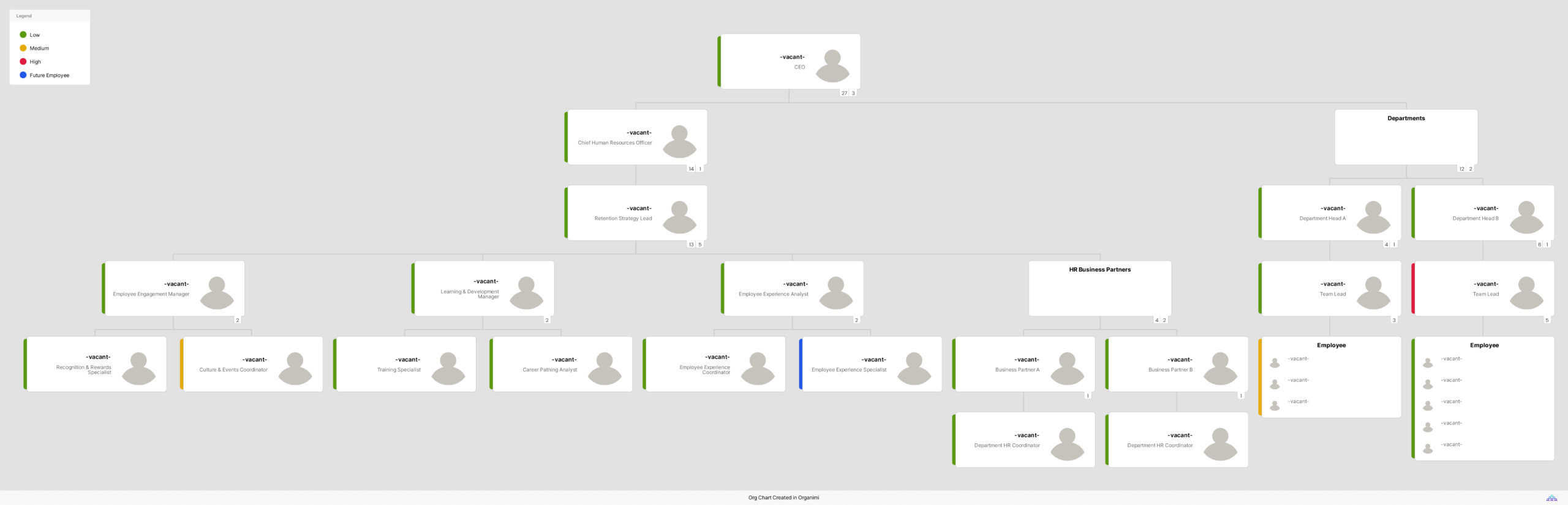
Effective retention is a team sport, involving roles across HR and general management. Using an example structure, let’s explore the roles essential for a comprehensive retention strategy:
Chief Human Resources Officer (CHRO) — Sets the overall people strategy and budget; ensures retention aligns with business goals.
Retention Strategy Lead — Designs, executes, and measures the company-wide retention program; analyzes turnover data
Employee Engagement Manager — Oversees programs that drive motivation, surveys, and communication; measures morale.
Recognition & Rewards Specialist — Develops and manages formal and informal recognition programs to celebrate performance and tenure
Culture & Events Coordinator — Manages initiatives that build a positive workplace culture and team cohesion.
Learning & Development Manager — Develops programs for upskilling, leadership training, and career growth; key retention drivers.
HR Business Partner (HRBP) — Serves as the dedicated HR contact for a specific department; advises managers on retention challenges.
Team Leads / Department Heads — Directly manage and mentor employees; own day-to-day engagement and development.
The Different Types of Retention Planning Organizational Structures
Ride-sharing companies often adopt different organizational structures to best manage their rapid growth and geographic diversity. Here are commonly used structures:
Centralized Structure — All key retention roles (e.g., Engagement Manager, L&D Specialist, Rewards Specialist) report up a single, dedicated line to the CHRO or a VP of People.
Decentralized (or Matrix) Structure — Specialized retention roles are integrated into functional departments. For example, a “Training Specialist” might report to the L&D Manager (functional reporting line) and work primarily with the Department Head of Engineering (project reporting line).
Functional Structure — Retention responsibilities are divided among distinct HR functions, each led by a specialized manager. For example, a Benefits Manager (focused on total rewards) and a Talent Development Manager (focused on growth) both report to the CHRO.
Steps on How to Create Your Retention Planning Organizational Structure
A clear organizational chart is your most powerful tool for implementing a sustainable retention strategy. Follow these steps:
Audit Your Current Roles — Review existing roles in HR and leadership. Identify which roles are already responsible for retention tasks (e.g., performance reviews, training).
Define Strategic Gaps — Based on your turnover data and engagement scores, determine what functions you’re missing. Do you need a dedicated Employee Experience Analyst? Is your L&D function robust enough?
Delineate Clear Ownership — Assign specific, measurable retention metrics (like time-to-promotion or new-hire engagement scores) to the roles you identify, from the CHRO down to the Team Leads.
Visualize with an Org Chart Tool — Use a tool like Organimi to map out the reporting lines. Include the specific retention responsibilities in the role descriptions within the chart. This clarity is crucial for all stakeholders.
Communicate and Implement — Share the new structure widely. Ensure all managers, especially Department Heads, understand their retention role and are trained on the programs developed by the Retention Strategy Lead.
Regularly Review — The structure should be dynamic. Update your chart to reflect any changes in strategy, staff, or business needs.
In Summary
Retention is too important to be a side task. By establishing a dedicated, clear structure, you’re creating a framework that systematically supports your most valuable asset: your people. This structure, visualized through a detailed organizational chart, ensures every effort is coordinated and effective.
Looking to build dynamic and shareable org charts? Explore what Organimi’s org chart software can do and sign up for a free 14-day trial today!