
A wedding is a very special day for many couples, marking the beginning of a new chapter in their lives. But planning can be stressful. For a wedding to feel seamless, it needs to be carefully orchestrated, and having a defined organizational structure can help. This ensures that everyone knows their role, reduces confusion for vendors and guests, and helps deliver the couple’s vision for their special day.
What Is a Wedding Planning Organizational Structure?
A wedding planning organizational structure outlines how tasks are divided, grouped, and coordinated throughout the wedding planning and execution process. It’s also a visual representation of who reports to whom, so that everyone on the team knows their role. By putting this structure in place, a wedding planning team can deliver efficiently and stay aligned with the couple’s goals.
The Main Components of a Wedding Planning Organizational Structure
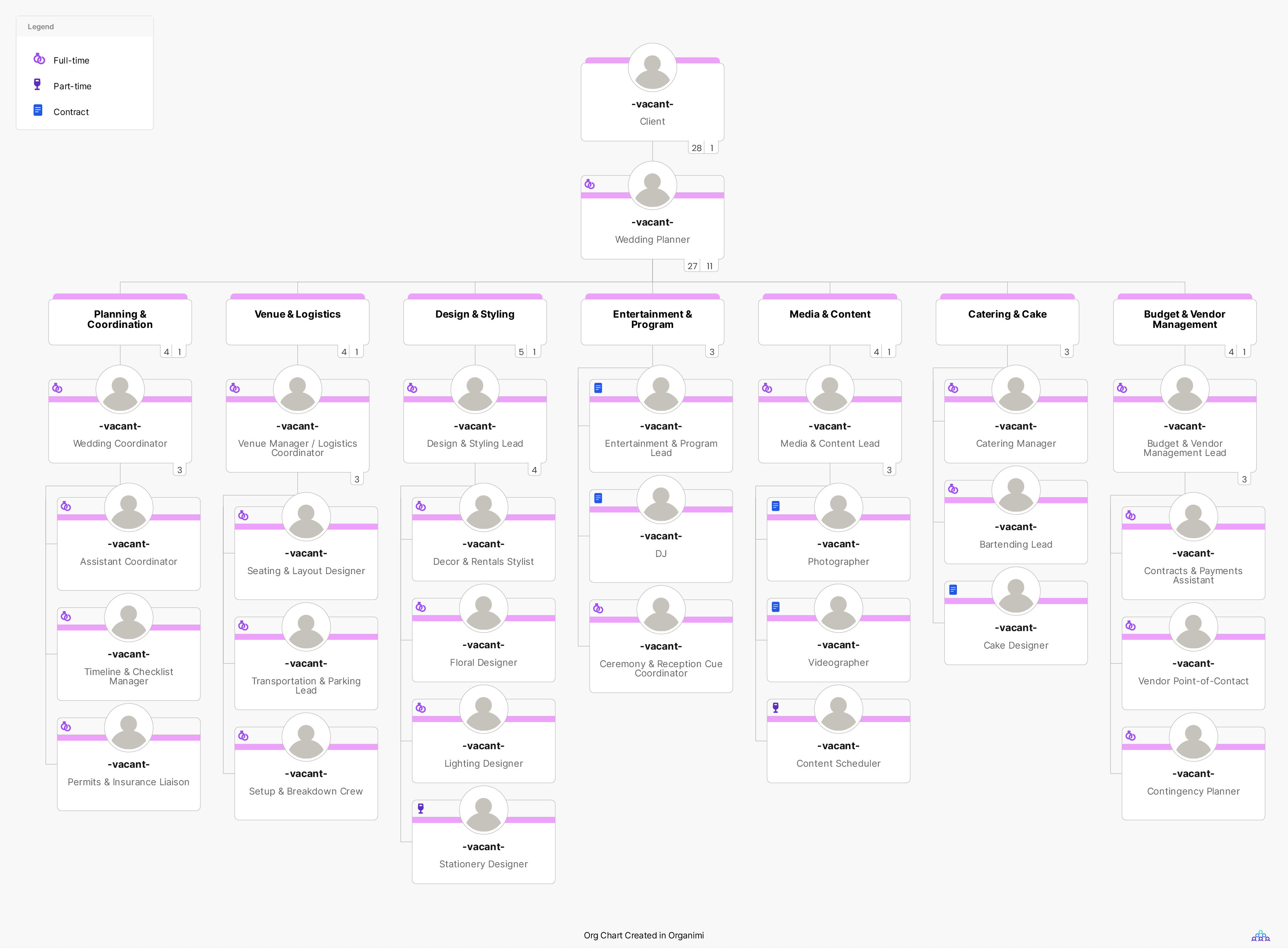
A wedding organizational structure breaks down the responsibilities into key domains, each with a lead who reports to the main coordinator (often the Wedding Planner). Here are the core roles and how they connect:
Couple / Clients — The couple is the ultimate decision makers, as they set the vision, approve the budget, and give final sign‑off on major items.
Wedding Planner — This person reports directly to the couple and oversees the entire planning process. They coordinate all other leads, vendor relationships, timeline, budgeting, and day‑of execution.
Venue & Logistics Lead — Reporting to the wedding planner, they are responsible for venue selection, layout, rentals, transportation, setup, and breakdown.
Entertainment & Program Lead — This person manages the flow of the ceremony and reception, music/MC, timeline of events, and vendor coordination for AV/entertainment.
Budget & Vendor Management Lead — Oversees contracts, payments, vendor communications, financial tracking, and contingencies.
Media & Content Lead — This person is responsible for things such as photography and videography, coordinating with the program lead to capture key moments.
The Different Types of Wedding Organizational Structures
While weddings are highly tailored, you’ll still notice different structural approaches depending on the size, budget, and complexity of the event:
Traditional Structure — A single lead, or wedding planner, oversees everything, and all the sub‑teams report directly to them. This is common for medium to large-scale weddings with full vendor lists.
Functional Structure — The planning is organized by function, for example, Logistics, Design, Program, and Budget, and each domain has a lead who reports to the planner. Useful when the wedding involves many vendors and distinct teams.
Divisional Structure — For multi‑day events or weddings where there are multiple smaller events, such as a welcome party, ceremony, and after‑party, each division has its own sub‑lead who may function semi‑autonomously, but they still report to the Wedding Planner. This works well for destination weddings, large guest counts, or themed weekends.
Steps to Create Your Wedding Organizational Chart
Follow this step‑by‑step guide to create a clear, functional structure that you can turn into an org chart:
List Down Key Roles and Functions — Start by identifying all the major functions your wedding will require, such as logistics, design, and entertainment. For each, note the key responsibilities.
Define Each Role Within Those Functions — Once you have named the functions, define the lead role for each (ie, Venue & Logistics Lead) and the supporting roles (ie, Setup Crew, Transportation Coordinator). Clarify what each role will do.
Delineate the Reporting Relationships — Starting from the top, begin to chart out who reports to whom. This clarity avoids duplication, miscommunication, and ensures accountability.
Choose the Right Structural Approach — Think about the size and complexity of your wedding. If it’s a smaller gathering, a simpler traditional structure may work well If you have many vendors, guests, or events, you may want a functional or divisional structure.
Create Your Org Chart — Using an org chart tool such as Organimi, build a chart showing all roles and reporting lines. Include the couple at the top, then the planner, then the leads, and finally the sub‑roles. Use colours or custom fields to distinguish leads vs. supporting staff vs. external vendors.
Implement and Share Your Organizational Chart — Once the chart is complete, share it with your planning team and key vendors. Encourage questions and feedback so everyone understands the structure, and lastly, keep the chart updated as roles shift or new vendors come on board.
In Summary
A well‑defined organizational structure for a wedding is a great tool to use, ensuring clarity, accountability and smoother coordination. And when you use a tool like Organimi to visualise the structure, you give everyone on the team a clear view of your vision, making your special day magical and memorable.
Looking to build dynamic and shareable org charts? Explore what Organimi’s org chart software can do and sign up for a free 14-day trial today!