

The C-suite, or executive suite, is the highest level of leadership in a company. These are the decision-makers who drive long-term strategy, oversee company performance, and manage the key departments that keep the business running smoothly.
To operate efficiently and stay competitive, companies need a clearly defined organizational structure. A strong structure ensures clear responsibilities, streamlined reporting, and better alignment across departments.
What Is a C-Suite Organizational Structure?
A C-suite organizational structure defines the hierarchy and reporting relationships among a company’s executive leaders. It includes roles such as the CEO, CFO, COO, and other top executives who oversee functional areas within the organization.
The C-suite structure reflects how leadership responsibilities are divided and how those leaders collaborate to achieve company goals. A visual org chart helps make this structure clear for board members, employees, and stakeholders.
The Main Components of a C-Suite Organizational Structure
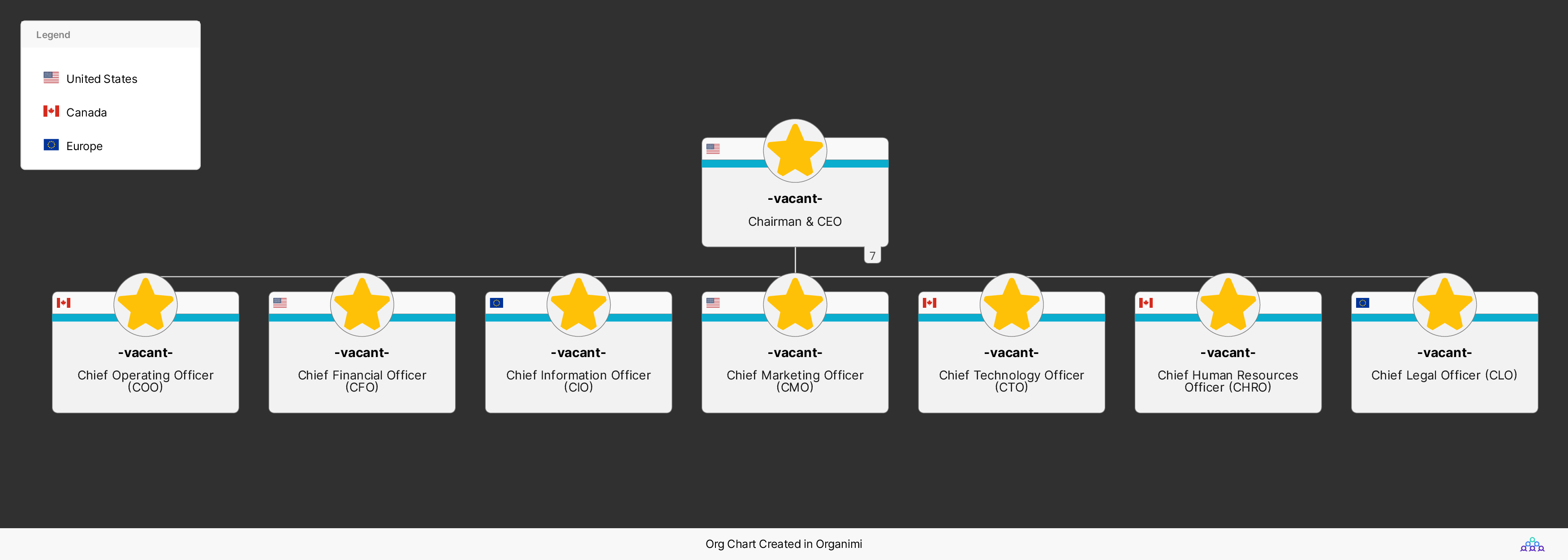
The specific composition of a company’s C-suite can vary depending on the size, industry, and strategic goals. However, most modern organizations have the following key leadership roles:
Chief Executive Officer (CEO) — The CEO is the top-ranking executive, responsible for the overall strategy and direction of the company. They report directly to the Board of Directors and oversee the entire executive team.
Chief Operating Officer (COO) — The COO manages daily operations and ensures that all business units are executing the company’s strategy. They often supervise departments like logistics, customer service, and production.
Chief Financial Officer (CFO) — The CFO leads the company’s financial planning, reporting, and analysis. They manage budgeting, procurement, and compliance with financial regulations.
Chief Information Officer (CIO) — The CIO oversees IT infrastructure, internal systems, and digital strategy. They ensure that the company’s technology aligns with business goals.
Chief Technology Officer (CTO) — The CTO is typically focused on innovation and product development, especially in tech-driven companies.
Chief Marketing Officer (CMO)— The CMO manages marketing, branding, communications, and customer engagement. They focus on driving growth and improving the company’s public presence.
Chief Human Resources Officer (CHRO) — The CHRO oversees recruitment, employee relations, training, and benefits. They play an important role in shaping company culture and workforce development.
Chief Legal Officer (CLO) / General Counsel — The CLO handles legal matters, risk management, and regulatory compliance. They provide counsel to the CEO and Board on corporate governance and liability.
Different Types of C-Suite Structures
Companies may adopt different C-suite configurations based on their size or industry. Here are some common variations:
Traditional Hierarchical Structure — This structure features a clear chain of command, with the CEO at the top and all other C-suite executives reporting directly to them. This works well in organizations with centralized decision-making.
Functional Leadership Structure — Each C-suite executive oversees a specific functional area such as finance, operations, and technology, and their departments are structured accordingly. This allows for strong specialization and is ideal for larger organizations.
Matrix Structure — In matrix-style organizations, executives may have dual reporting lines; for example, one might report to both the CEO and to a project or regional leader. This setup is more complex but offers flexibility for global or project-based businesses.
How to Create a C-Suite Organizational Chart
Follow these steps to build a clear, professional-looking C-suite org chart:
Identify Executive Roles — Start by listing all C-suite positions relevant to your company. Depending on your industry, you might include additional roles like Chief Sustainability Officer, Chief Data Officer, or Chief Product Officer.
Define Reporting Relationships — Map out who reports to whom. Typically, all C-level executives report to the CEO, while the CEO reports to the Board. Make sure to clarify dotted-line or matrix-style relationships if they exist.
Choose the Right Structure — Select the type of org structure that fits your company, whether it’s traditional, functional, or matrix-based. Consider your company’s size, goals, and leadership style as well.
Build Your Org Chart Visually — Use a tool like Organimi to visually create your org chart. Add each executive’s name, title, department, and direct reports. You can also include custom fields like location, tenure, or key responsibilities for even more clarification.
Share and Maintain Your Org Chart — Once your chart is complete, share it with your leadership team and update it regularly as roles evolve. An up-to-date chart improves transparency and helps everyone stay aligned.
In Summary
Your C-suite isn’t just a group of executives; it is also the engine that drives your company’s strategy and success. A well-structured C-suite org chart helps clarify roles, improve decision-making, and foster better collaboration at the highest level.
Looking to build dynamic and shareable org charts? Explore what Organimi’s org chart software can do and sign up for a free 14-day trial today!