
There’s a lot more to a baseball team than just the action on the field. Behind every pitch and play is a team of coaches, staff, departments, and leadership, all working in sync to keep things running smoothly.
For a team to truly thrive, there needs to be structure. A solid organizational framework helps streamline operations, keeps communication clear, and makes sure everyone knows their role and how it contributes to the bigger picture.
What is a Baseball Team’s Organizational Structure?
In any baseball organization, knowing how roles are divided is key. That’s where the team’s structure comes in, as it lays out how responsibilities are shared, who reports to whom, and how decisions move through different departments.
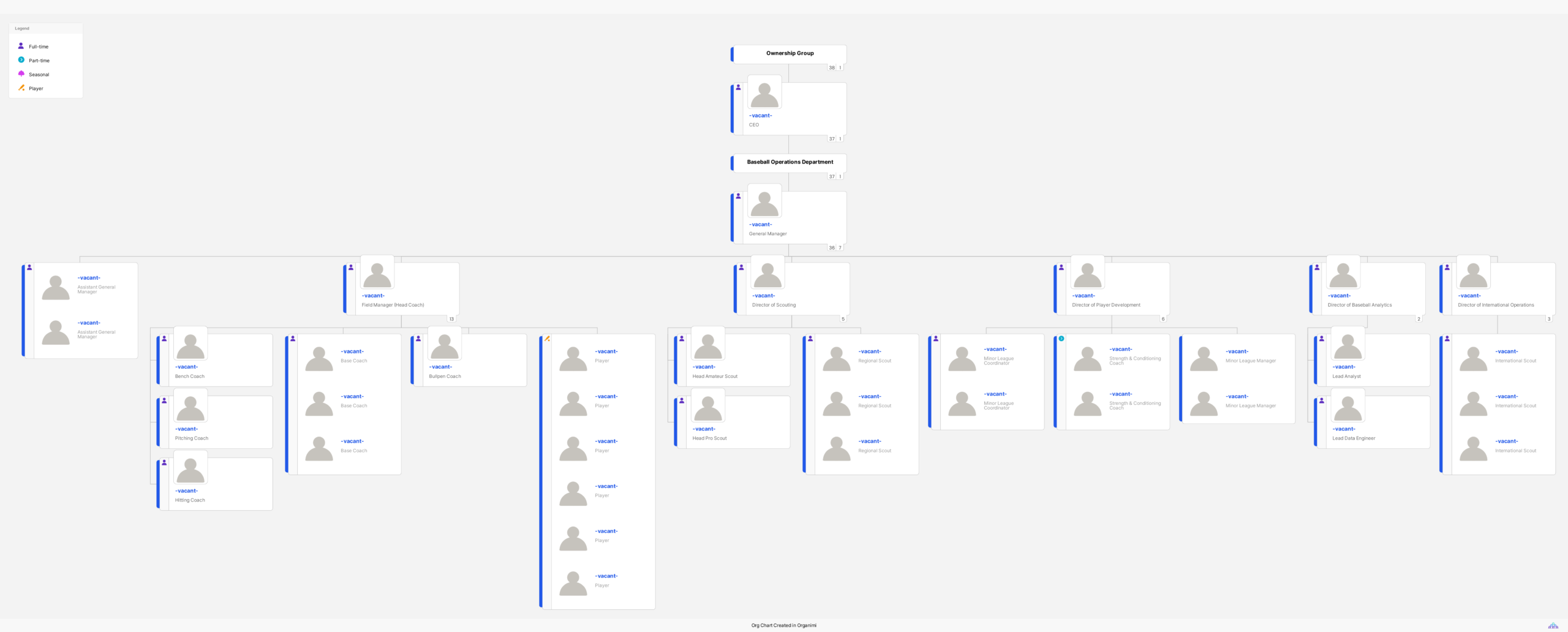
This is often mapped out in an organizational chart, showing the chain of command from ownership and executives all the way down to coaches, players, and support staff. When this structure is clear, operations run smoothly, and team success is achieved.
Key Roles in a Baseball Team Organizational Structure
While every team’s structure may vary slightly based on its level, most usually follow a similar format with core components:
Team Owner / President — The top decision-maker, often responsible for big-picture business decisions, budgeting, and long-term planning. They may not be involved in daily operations, but they set the strategic direction for the organization.
General Manager — The General Manager oversees baseball operations, including roster management, trades, contracts, and talent acquisition. They serve as the bridge between the team owner and coaching staff.
Field Manager — Leads the on-field team. They are responsible for managing games, setting lineups, and guiding the team’s playing strategy.
Assistant Coaches — Includes roles such as hitting coach, pitching coach, bullpen coach, and base coaches. Each specializes in different aspects of gameplay and reports to the Field Manager.
Strength & Conditioning Coach — These coaches ensure players are physically prepared through personalized training programs and injury prevention strategies.
Players — The athletes who bring the team’s vision to life on the field. While they are not managerial staff, they are central to operations and supported by every other role.
Scouting & Player Development — Focuses on evaluating talent for both upcoming prospects and opponents, and helping existing players reach their full potential. Often operates under the Director of Baseball Operations.
Common Baseball Team Organizational Structures
Different baseball organizations adopt different structures based on size, budget, and objectives. Here are a few common ones:
Hierarchical (Traditional) Structure — This is the most common structure, with a clear chain of command from the owner down to players. Each department, from baseball operations, coaching, medical, and admin has its own leadership reporting to the General Manager. This structure is ideal for larger organizations, such as professional and collegiate teams.
Functional Structure — Here, staff are grouped by area of expertise, such as coaching, conditioning, analytics, and marketing. Each department works independently toward its function-specific goals but reports to a central leader. This allows for specialization and is effective for mid-sized teams.
Divisional Structure — Used by organizations with multiple teams, this structure separates roles by division, each with its own mini-org chart. Each division operates semi-autonomously while staying aligned with the larger organizational goals.
How to Build a Baseball Team Organizational Structure
Follow these steps to create a baseball team org structure that promotes efficiency and collaboration:
Identify Key Departments and Roles — Start by outlining the key areas your team needs to run: coaching, medical, player development, front office, marketing, etc. Define the major roles within each group and what responsibilities they’ll carry.
Establish Clear Reporting Lines — Determine who each role reports to, starting at the top and working your way down to entry-level or game-day staff. This promotes transparency and accountability.
Choose a Structure That Matches Your Needs— A smaller community or minor league team might benefit from a flat or functional structure, while a pro team with multiple locations may need a divisional model. Match your structure to your team’s complexity and resources.
Create a Visual Org Chart — Use a tool like Organimi to design your org chart. Make sure it clearly shows all roles, departments, and reporting lines so everyone knows where they fit.
Share It With Your Team — Once finalized, distribute the org chart to your staff and coaches. Keep it updated as the team grows, hires new staff, or shifts responsibilities. A transparent structure builds trust and encourages cross-department collaboration.
In Summary
A baseball team isn’t just built on talent: it thrives on structure, communication, and clearly defined roles. A well-organized team structure helps streamline operations, clarify responsibilities, and support both players and staff in doing their best work.
Whether you’re managing a college team, a semi-pro roster, or a full MLB organization, creating an organizational structure is key to long-term success.
Looking to build dynamic and shareable org charts? Explore what Organimi’s org chart software can do and sign up for a free 14-day trial today!