

A basketball team is more than just players and their coaches; It’s a complex, high-performing organization made up of strategy. What makes it all work is a clear structure that keeps everyone aligned. When roles are defined and communication flows, the team can focus on what matters most: winning games and building a successful brand.
What Is a Basketball Organizational Structure?
A basketball team’s organizational structure outlines how tasks and responsibilities are divided across the entire organization.
Think of it as a visual blueprint that shows how the team is built, from ownership and front office executives to coaching staff, scouts, and support roles. A well-designed structure promotes alignment between departments and provides a foundation for strong team performance on and off the court.
The Main Components of a Basketball Organizational Structure
Here are the key roles and functions within a typical Basketball team:
Owner / Ownership Group — At the top of the hierarchy, the owner or ownership group provides financial backing and strategic oversight for the entire organization. They appoint a Team President or CEO to manage operations.
Team President / CEO — The President or CEO oversees both basketball and business operations. They work closely with the General Manager and COO to guide the team’s direction and ensure every department aligns with the team’s mission.
General Manager (GM) — The General Manager leads player acquisition, roster decisions, and long-term team building. They manage all basketball staff and report directly to the President.
Head Coach — Responsible for game strategy, in-game decision-making, and player development. Reports to the general manager.
Assistant Coaches — Support the Head Coach in implementing systems and managing practices.
Scouting Team — Includes college, professional, and international scouts who evaluate talent for drafts and trades.
Analytics Department — Provides performance data and insights to help inform strategic decisions.
Medical & Performance Staff— Handles player health, conditioning, injury prevention, and rehabilitation.
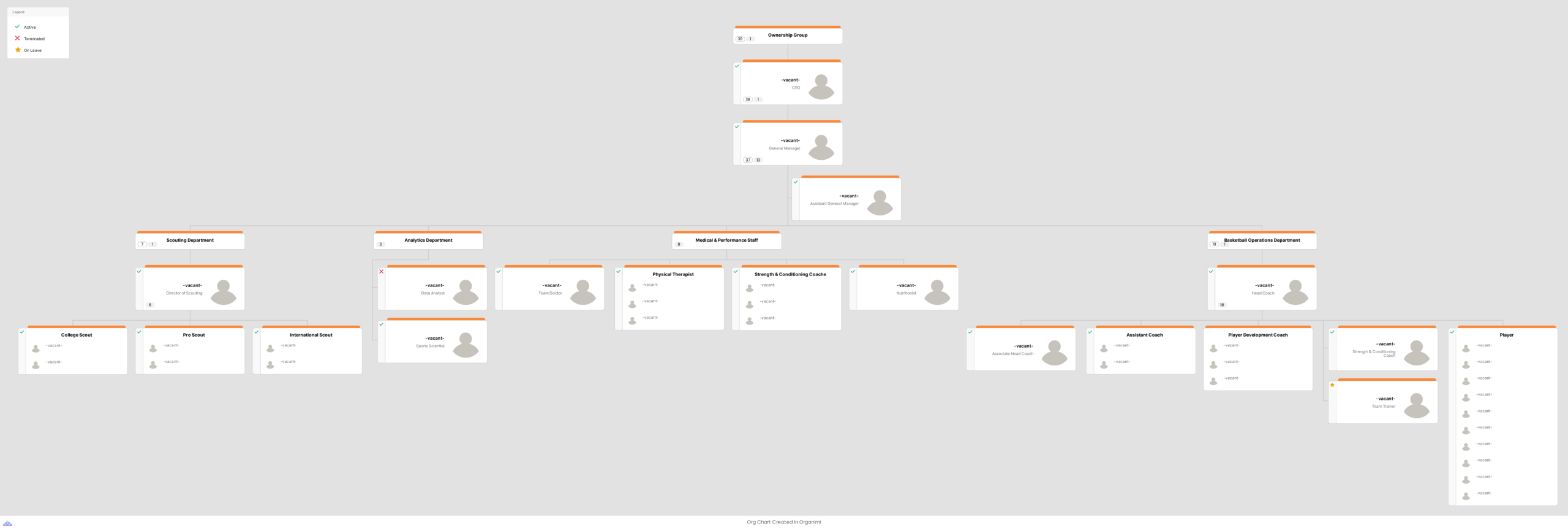
Different Types of Basketball Organizational Structures
Basketball teams use different structural models based on size, ownership style, and operational goals. Here are the most common ones:
Traditional Hierarchical Structure — This is the most common structure for professional sports teams, which features a clear chain of command, with defined roles and reporting lines streamlining communication and accountability.
Functional Structure — This model separates departments by expertise, such as coaching, scouting, and business functions. Each function is managed independently, promoting specialization but requiring strong coordination between departments.
Divisional Structure — In larger organizations, especially international franchises or G-League affiliates, teams may be split into divisions based on region, team level, or function. Each division operates with some autonomy.
Steps on How to Create Your Basketball Organizational Structure
Here’s a simple step-by-step guide to help you build a clear and efficient basketball team org structure:
Identify Core Roles and Departments — Start by listing all key departments, for example Basketball Operations, Business Operations, Marketing, or Scouting. Within each, define the critical roles and responsibilities needed to keep your team competitive and compliant.
Outline Reporting Relationships — Determine who reports to whom. From the owner down to department heads and staff, create a reporting structure that ensures accountability, decision-making efficiency, and cross-department collaboration.
Choose the Right Structure Type — Decide on a structure that aligns with your team’s size, goals, and complexity. A small semi-pro team might benefit from a lean, flat structure, while a professional franchise may need a detailed, multi-tiered org chart.
Create Your Org Chart — Use an org chart creation tool like Organimi to map out your team’s structure visually. Be sure to include titles, reporting lines, and departments to give staff, stakeholders, and league officials a clear view of the team hierarchy.
Share and Maintain Your Org Chart — Once finalized, distribute your org chart internally and keep it updated as staff, roles, or departments change. This ensures everyone understands their place in the organization and supports smoother onboarding and collaboration.
In Summary
By creating a clear organizational structure, basketball teams can streamline operations, improve communication, and build a foundation for long-term success. It’s not just about winning today, but setting the stage for sustained excellence in the seasons to come.
Looking to build dynamic and shareable org charts? Explore what Organimi’s org chart software can do and sign up for a free 14-day trial today!